Blog

When You Work with Your Hands & Suddenly Cannot: The Agony of Dyshidrotic Eczema (Pompholyx)

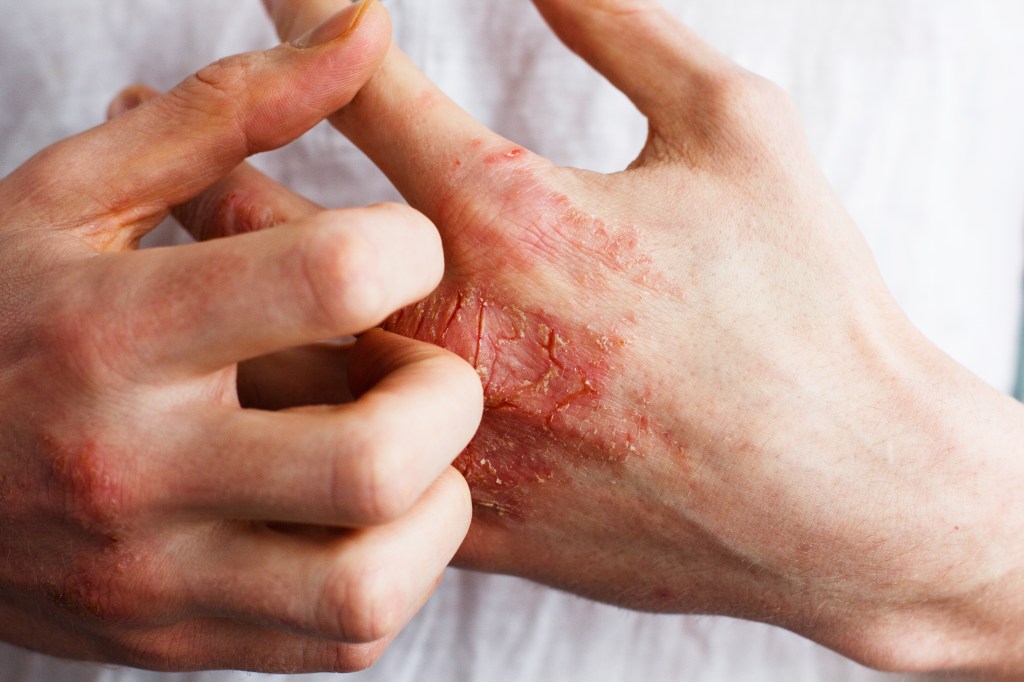
The dry, flaky, inflamed skin on hand known as Dyshidrotic Eczema or Pompholyx


One of the things I love most about my job as a winemaker is working with my hands. Because I make small lots of wine, I can truly say I’m making hand crafted wines. And a hands-on approach is truly appreciated by wine enthusiasts because it implies a level of attention to detail and care that might not get transferred through mechanics.

In my work, I hand sort all the grapes that come into the cellar; I do manual punchdowns throughout fermentations; I work with my hands to test the sugar levels of fermentations; make yeast inoculates and nutrient additions; as well as manage all other aspects of cellar operations, which requires using your hands for cleaning and sanitizing things, rolling and mobilizing barrels, and supporting, lifting and mobilizing equipment, and so on.

Last year, for the first time in my career, my hands were not able to perform these key tasks, and actually kept me from most of the winemaking duties. I completely relied on a hired cellar worker to be my hands for me.

Right before the first grapes of the season were picked and arrived to the winery by truck, I noticed some strange dry patches on the palms of my hands between my thumbs and pointer finger. Tiny blisters would emerge with an itch that was so intense I had to scratch constantly, opening up the blisters. The skin cracked open and produced several small wounds like paper cuts. The pain was intense and not just on the surface, at the wound level, but ached deeper into my hands, deep into the muscle. The pain became so debilitating that I would hold my hands in closed fists. The wounds would heal, the skin turned into leather consistency with peeling skin on the outer dermis, and then the process would start all over again with new blisters, horrible itching, scratching, wounds, and deep pain.

I struggled though the harvest season quietly. Nothing would relieve the constant cycle of itching and pain. I tried everything – low prescription topicals, over the counter Cortisone, traditional eczema creams, all-natural creams, a salve made by my acupuncturist/herbalist. The inflammation, or “flare up” as the dermatologist called it, was chronic and lasted for over eight months.

Finding myself in this predicament of discomfort and difficulty using my hands only intensified my already barely managed anxiety. It was affecting my ability to work, to mother my toddler, and to take care of myself. The smallest tasks, like opening a jar, had become challenging.

I learned that the origin of this type of eczema is often tied to trauma.

Years ago, I had studied holistic nutrition. Holism teaches you to examine the source of health issues, not simply care for and treat symptoms. Specialization often misses the cause for what ails us. We too often bandaid our health problems and never enjoy true healing, wellness and homeostasis.

In my case, the surface healing wasn’t happening. I was stuck on topical treatments, trying to put a bandaid on the condition. Of course, this failed.

In therapy, I mentioned my research about trauma and this type of inflammation. We addressed the sources of trauma and PTSD that could benefit from deeper work. I also discussed the need for addressing trauma in my acupuncture sessions – we worked with needles, moxibustion and herbs to address both the trauma and inflammation.

I’m not hiding behind my trauma – I’ve written about it extensively. My experiences with postpartum depression and PTSD, then the pandemic in all of its mayhem – and ultimately getting Covid and the strange heath issues that followed – were enough to cause the flare up.

I returned to my doctor to try a new topical ointment to heal the inflammation while utilizing other therapeutic resources.

I also decided to do some much needed work on myself, digging deep into my trauma, my pain and inner turmoil, my fears and anxiety, and flipped the script to seek out opportunities to bring joy to my life, doing things just for me for no other reason than to fill up my own cup.

I took a remarkable figure drawing class at the local cultural center at the beginning of the year. That sparked a practice of using time with my toddler to dig deeper into art therapy.

I also picked up some great books. I started a tiny book club with a couple of friends to feed my love of reading. It also promised connection with other women, something that I had neglected once I became a mother. I just didn’t have the energy and mind space to cultivate and nurture friendships.

Most importantly, I made time for writing in my journal and contemplating the metaphysical stuff that fuels my curiosity and awe. I finally hired a personal trainer to help me bring regular movement and fitness back into my life. I think the vitamin D from the summer months also helped. And, we took two separate vacations this summer, which I think proved to be intensely therapeutic. Both trips brought us together with long-distanced family and the new change of scenery helped elevate spirit.

As we get ready for a new harvest to commence, I am not able to take on the work load per previous vintages. My hands, while improved, are still vulnerable and the skin is not completely healed. I don’t know how long flare ups will be a part of my life, so I will need to be proactive and have help in the cellar to carry me through each vintage until my hands can handle the work. But, this condition may also be a signal from the universe telling me it is time to have help carry out my work orders here on out so that I am more hands off. I am open to that in this season of my life as I navigate possibly home schooling our child so we can travel and, ultimately, shift from struggling with the constant attention my business requires from me, along with the stress and anxiety it delivers, and moving towards enjoyment, getting more centered and living my life with more purpose.

I’ve got to hand it to the universe. We are pushed to discomfort in order to grow, to shift, and to move forward on our journey. I am seeing possibilities for my life and new ways of doing things because of this health issue. As painful as it has been, I am grateful for it. It has pushed me to reconsider how I do my work, how I will continue to do my work, how I can change some things, and how I can change the way I work and do business.
Casting Stones

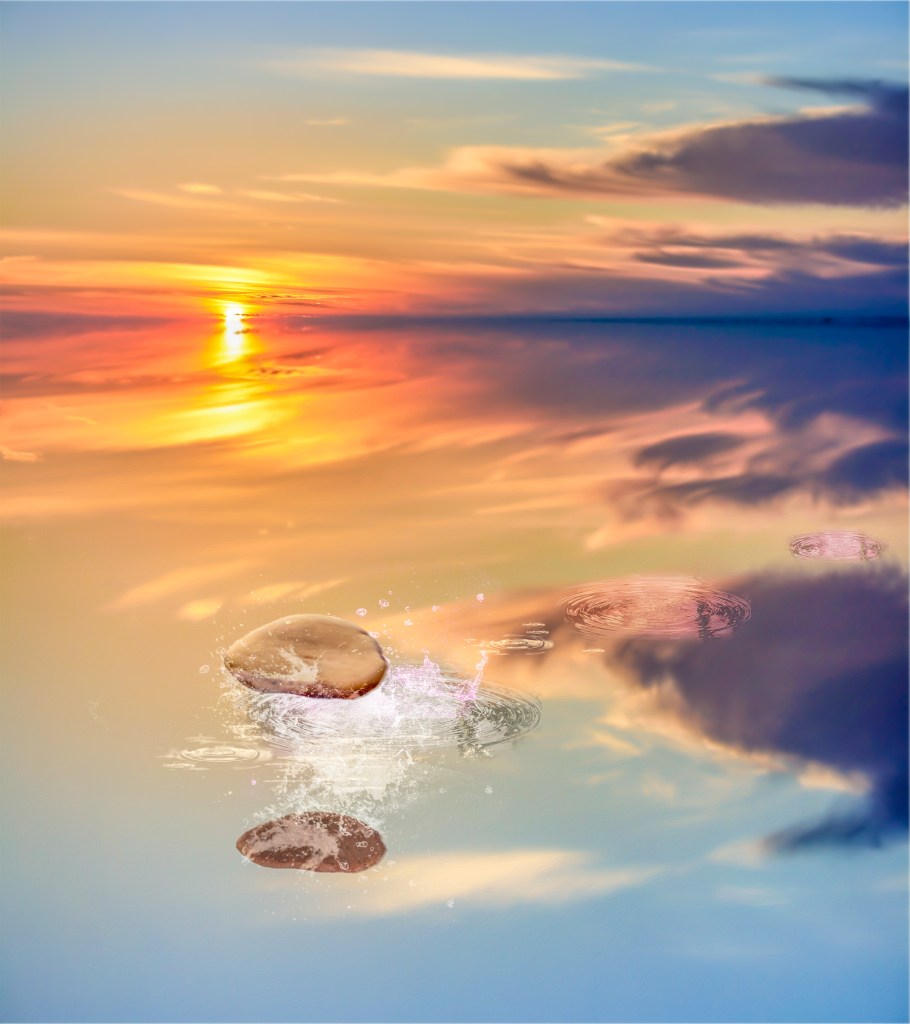
Flat stone skipping across calm water at sunset

On planet earth. I woke up this morning to the news that Russia had launched an invasion of Ukraine early this morning, attacking from multiple directions despite pleas and warnings of consequences from the US and the International community.

“Peace on our continent has been shattered. We now have war in Europe on a scale and a type that we thought belonged to history.” – Jens Stoltenberg, NATO Secretary General.

As I write this, I’m at home battling Covid-19. Yes, the pandemic is still sweeping across the globe making people sick. And as hard as I have tried to keep my family safe from the virus spread, it has inevitably entered my world.

I am always an optimist. Until I’m not. And I have learned to “reframe” for most of my adult life when optimism has all but disappeared.

I thought 2020 would be a year of incredible “vision” (hence 20/20). I was making big plans, coming out of a challenging year of postpartum recovery and depression. I had been blindsided by the aftermath of my son’s birth, physically, mentally and emotionally. And then I had emerged renewed, having grown from the experience. So 2020 sparked optimism. But just a couple of months in, and, well, things had completely fallen apart with the spread of Covid-19. There were certainly learning opportunities to be had on a global scale. And as 2020 was coming to its close, 2021 had to be better.

21 is my lucky number, so I clung to my optimism. In some ways 2021 was better than 2020, but, I think much of it was just getting used to living with anxiety, fight-or-flight response, and eventually pandemic fatigue. The course of the year also set in place a profound check on white privilege, white fragility, and a dire call for real and meaningful inclusivity, safety, and opportunity for all – which seemed to streamline the narrative towards hope, healing and growth. If one were to get philosophical on this moment in history, while still very much in it, it could be summarized as a critical time for shifting away from systems that were no longer serving humanity.

By the end of 2021, once again, the general sentiment was that 2022 had to be better.

After a new moon stared the New Year, and an auspicious, rare palindrome fell on 2.22.22 with universal signs for hope and balance, and just after the Bejing Olympics closed, an event embracing world peace and celebration of humanity, the news came in of the Russian attack on Ukraine.

I believe the universe means to bring about great things, but certainly not without cost. And certainly not without learning and growth opportunities. Growing pains hurt.

But you cannot denigrate the enormity of a global pandemic and acts of war. These are truly the most brutal, deadly and horrific events that cannot be oversimplified as learning and growth opportunities. Especially when they repeat over and over again throughout history. It seems humanity just cannot and will not learn the most grave and serious lessons. It seems the world doesn’t really change at all. Has this pandemic taught us nothing?

I remember the aftermath of 9-11. I had a front row seat to it, having watched the plane hit the Pentagon as I was riding the Metro subway, reading a book on my way to work while crossing the Potomac, and out of the corner of my eye a missile like movement swept past and then a black plume of smoke appeared, and we were back underground. The country seemed to come together after that attack. It was something to behold. But not too soon after, the songs on the radio shifted from anthems to basic pop again, and the love thy neighbor sentiment drifted away. That’s the tragedy of tragedies. When there’s a real opportunity to shift, to change, to come together, to exist with peace, love and the best in humanity, we sit there for just a moment, and then we go back to the way things were.

Lessons on this scale cannot be left for just a few who are willing to listen, learn and grow. I truly believed the pandemic and everything that came after its inception was enforcing a kind of check on humanity.

And yet here we are.

I’m watching my three year old son play with Spiderman, Captain America and Ironman and I’m sinking. There are no superheroes to come and save the day. I know this. But really. Who is going to save humanity? When are systems going to really be in check on humanity? Are we just doomed to a fate that will play out over and over and over again until it’s all over and done and the planet has exploded into gases and particles in the universe? Until everything is either all dark? Or all light?

I keep thinking about the Thomas Aquinas quote: Good can exist without evil, whereas evil cannot exist without good.

It will never be just good.

Good and evil cannot exist without the other anymore than light and dark can exist without the other. I guess this is just the way it is until it isn’t. I guess we have to accept that the world cannot exist without duality until it’s all over. The world cannot exist without opposition and conflict until the world is simply gone.

So then nothing really changes, does it?

If only some people will be open and willing to listen, learn or grow that doesn’t really change the world. That changes some. Change may not be the pinnacle of where humanity must land; it’s the place where humanity should land – changed for the better. But it is certainly a call to action from the best intentions in humanity.

“Be the change you want to see in the world.” – Ghandi

“Not everything that is faced can be changed, but nothing can be changed until it is faced” – James Baldwin

“Everyone thinks of changing the world, but no one thinks of changing himself.” – Leo Tolstoy

“It doesn’t matter how strong your opinions are. If you don’t use your power for positive change, you are indeed part of the problem.” – Coretta Scott King

“All great changes are preceded by chaos” – Deepak Chopra

“Change will not come if we wait for some other person, or if we wait for some other time. We are the ones we’ve been waiting for. We are the change we seek.” – Barack Obama

“I alone cannot change the world, but I can cast a stone across the waters to create many ripples.” – Mother Teresa

“The world as we have created it is a process of our thinking. It cannot be changed without changing our thinking.” – Albert Einstein

“Yesterday I was clever, so I wanted to change the world. Today I am wise, so I am changing myself.” – Rumi


I am supposed to be the optimist. But in this moment, I’m really struggling.

So I must go back to nature, to the most grounding reality. Things change in nature: the moon and her cycles; the weather; the caterpillar; the chameleon; the egg. Change is inevitable. Things grow until they die.

Lao Tzu advised, “life is a series of natural and spontaneous changes. Don’t resist them; that only creates sorrow. Let reality be reality. Let things flow naturally forward in whatever way they like.”

It’s not that the world won’t change. Wars and pandemics will continue to happen and not because humanity is half evil but because it is the world’s nature to be in conflict. The point isn’t about trying to change the nature of humanity, where there is conflict, but to change the outcome.

I do not believe peace is a right. It is an outcome.

Because we know things are constantly changing, that there will always be duality and conflict, it means we will be in constant vulnerability to when darkness emerges for light to come through again.

My father always advised, “don’t worry about the things we have no control over.”

But that’s always been difficult for me. I have anxiety.

I think I finally understand what he meant. It’s less about the worry and more about self control. And it goes back to what Ghandi, Tolstoy, Rumi, and Mother Teresa suggest.

Our time here is short and our work here is to work on ourselves. To listen, to learn and to grow until we die – that is our real work. We only have control over ourselves. Chaos is happening around us all of the time. How we choose to react is completely up to us. Who we are and what we put into this lifetime is what influences outcomes. We can’t change the fact that pandemics will happen or that madmen will come in to power and cause horrible chaos and suffering. But we can balance evil with our earnest goodness. We can spin evil on its axis and change outcomes. We can embody in ourselves what is needed for humanity. We can be the stones cast across the waters creating ripples.

I don’t believe it’s our mission to change other people. I have a real problem with that notion. The greatest mistake people make within challenging climates – is believing they have the power to change a person – and that they even have the audacity and righteousness to try. Rather, if energy was spent helping to determine outcomes vs controlling other people’s intentions, we’d be moving forward.

We all know that woman who is determined to change her man into some fantasy idea of what she thinks her ideal man should be, instead of accepting her man for who he is. The “fairy godmother” syndrome of changing Cinderella into a princess for the ball never works – or at least never lasts.

You just have to accept what’s in front of you and do your part to offset the negative effects of these kinds of traumas on the planet. It’s not turning away from it. It’s leaning into making a better outcome. It’s about being a part of the solution. And part of that should be, ideally, in being a part of the world that learns from the world’s past mistakes.

This doesn’t change the anxiety that is setting in with this latest conflict. I am growing tired and weary from continuous, chronic fight or flight mode. I am overwhelmed and devastated for the Ukraine people, for the mothers with masked faces holding their babies in underground shelters, not knowing what’s going to happen to their homes, to their country, to their cherished loved ones.

I hug my boy. He and I are both recovering from Covid-19. As awful as I have felt for the past few days since the pandemic had reached my little world, I am on the mend. It’s sobering knowing so many were not so lucky. But a little light has come through. My little guy is playing again. Omicron has already peaked and new cases of Covid are on the decline as we are headed into spring and warmer weather. Yesterday the UK just ended all Covid restrictions, including its isolation law, to move back towards normality. Most parts of the US are doing the same.

As soon as we had symptoms we isolated. We stayed home. We were vigilant to not spread the virus. We did our part. We cast our stones.


On Raising Boys

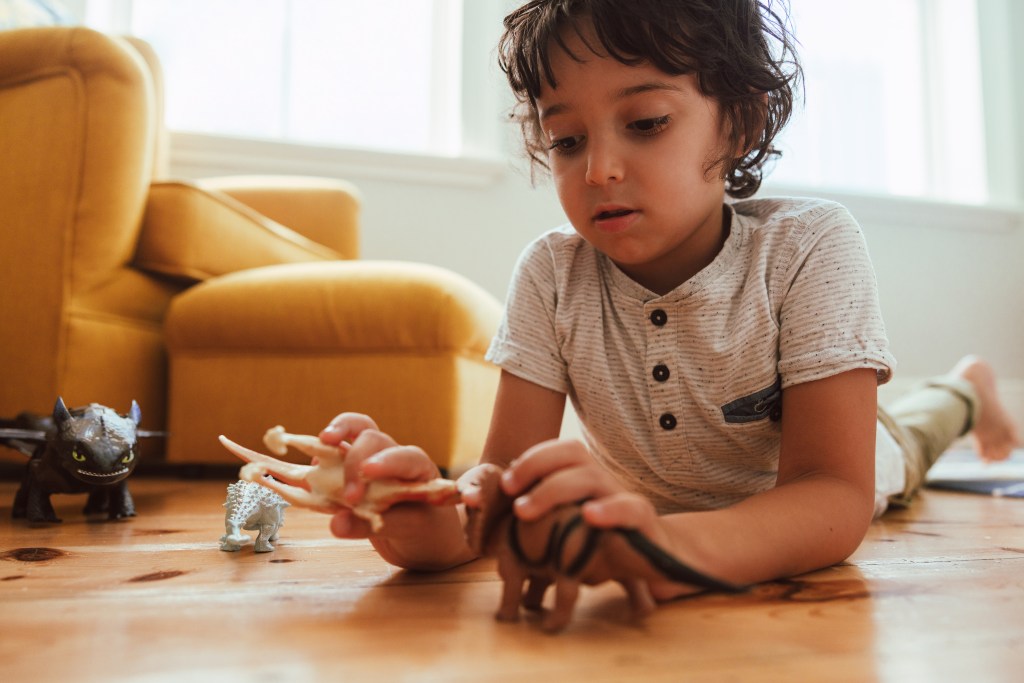
Creative young boy playing with dinosaur toys at home.


WHEN WE FIRST RECEIVED the test results indicating our baby’s gender, I completely missed the paragraph amidst other routine test results.  I was mostly concerned with learning whether or not I was going to have a healthy baby.  I was an older mom with some anxieties around my pregnancy.  

Truth be told, I was certain I was going to have a girl.  I wanted so badly to bring a girl into the world to add to the empowering “the future is female” movement that had been happening before and during my pregnancy, that I had been participating in and advocating since graduating from a women’s college.

Two days later, I re-opened the letter from the lab and saw the capital letters B-O-Y.  I screamed out in surprise!  Ha!  A boy!  A boy?  And then I cried.

For a few days I was a little sad that I wasn’t going to have a girl.  I needed to quickly process and even mourn the loss of the daughter in my mind and make room in my heart for a son.  There it was in print.  I was going to have have a boy.  A white boy – the face of ultimate privilege in America.  I wasn’t sure I had it in me to raise one.  

As soon as I was able to share that I was having a boy, all kinds of women in my life reached out to tell me what a joy it is to raise a boy.  “There’s nothing like the sweetness a boy has for his mother,” one colleague assured me.  There were all kinds of testimonies about the joys of raising boys.  

It became clear to me about how clearly we divide babies into two genders, and the weight we put on families and those babies before they even come out of the womb.  While I appreciated the anecdotal nostalgia my mamas of boys friends shared with me, I recognized the weight of the first question we ask a pregnant woman or new parent – boy or girl?  

We shop for new babies based on gender.  We even throw gender reveal parties to celebrate the odds of a boy or girl.  Knowing the baby’s gender makes a lot of people feel comfortable.  Perhaps because when you look at a brand new baby all you can see is the beautiful mystery of life.  Unless that child is getting its diaper changed, it’s nearly impossibly to identify a baby as boy or girl. There’s something special about that.  All a baby needs is love – to be fed, to be protected, and to sleep.  I think we could all learn a lot from a baby’s basic needs.

It wasn’t raising a boy, per se, that was making me nervous.  Perhaps my hormones were too drastically at play at the time, but, I had wanted a daughter so deeply – not because I was ever the kind of girl or woman who was so rigidly girly that I was stuck in a Barbie dream of wanting everything Pepto Bismol pink with princess dresses and tiaras to perpetuate that trite sense of girlness – but because the opposite was true.  I was a Tom Boy.  And I felt like I could handle that lane – of raising a girl, assuming that girl would be like me.

There’s a lot to sort through emotionally and mentally when you bring a baby into your home – especially before knowing what kind of baby you’re bringing into your home.  But, the truth is that we are never going to fully know or understand who that baby is until that baby grows into the person he or she or they are meant to be.  The pressure of getting it right with gender is a real thing.

I consider myself pretty progressive.  I do my best to be open minded and to learn.  I believe we all are here to share a human experience, to learn and to grow – and to love and accept.  So, then why was I putting so much pressure on myself about not having a girl, or, more directly – about raising a boy?  

It wasn’t just that I thought I was going to be good in the lane of raising a non-traditional girl by not pushing the girlie Disney princess crap but, rather, by protecting my daughter’s right to her own choices (who, let’s be honest, I hadn’t considered that she might have chosen the girlie Disney princess crap, which I’m sure I would have then felt compelled to save her from “it”, to help re-direct her away from harmful gender stereotyping, which, in itself could have been harmful if said daughter really liked and gravitated toward the overblown gender stereotypes).  

I felt totally overwhelmed.

It didn’t help that I was pregnant in a climate that seemed at odds with white males.  This was the Trump era.  This was the time when the criminals behind most mass shootings were young white males.  The country has been divided where one camp is heavily white.  We are learning about our white privilege and hopefully doing the work to be more woke.  But, let’s face it.  There’s a large portion of the nation that just won’t…

All of the sudden I was feeling an alarming pressure with raising a white boy that I wasn’t necessarily feeling with raising a white girl.  

I knew I was not going to be perfect at this.  But I was and still consider myself to be self aware enough to be quiet, to listen and to learn, and to try to be better, to try to be more compassionate and to try to be more inclusive.

Fast forward three years.  

I have a sweet little boy who strongly identifies as a boy.  

My husband and I have no issues or preferences around gender.  We have done our best to choose neutral surroundings to allow our child to not be influenced one way or another.  We have followed a strict baby-led or child-led philosophy – from everything to allowing our child to gravitate to his own preferences, to make his own choices when its appropriate, but also in the timing of milestones, we decided to remove any pressure for our child to perform or conform to any kind of timeline that wasn’t comfortably his own.  

We didn’t push weening, but continued it through my Covid vaccines and the booster shot to protect him as best we could.  We didn’t push eating solids, but allowed for baby-led feeding.  We didn’t push potty training, but waiting for him to take the lead.  We introduced a potty in the bathroom and figured he would start when he was interested.  And, that’s exactly what happened.  On New Year’s Day this year, he asked us if he could get underwear because he didn’t want to wear his diaper anymore.  So, we went to the store to pick up some underwear and a couple accidents later, he is well into his potty training and he’s doing great!  There has been absolutely no pressure on him to do anything but be happy.

I’m not saying we’re great parents, we’re just doing our best not to set him up for unnecessary disappointment, frustration, confusion based on what is largely expected of children, socially.  Another parent was aghast that we hadn’t started potty training him earlier and even suggested we would cause him harm by way of embarrassment.  Nope.  He’s fine.  He stepped into it when he was ready – we just let him take the lead and then fully supported him along the way.  Like every parent, we’re just doing our best, doing what feels right for our family, for our child.

Which is why I felt arrested when I was confronted by a non-binary person at the park.  My son fell down and wasn’t badly hurt, but, like most toddlers, he was surprised by the fall, felt a little sore, but mostly upset from having fallen down in the first place.  I like to console my child in these moments.  I held him in my arms and quietly cooed.  One of the things I said to him a few times, “you’re okay, my sweet boy.  Everything is alright, my sweet boy.”  I often call him my sweet boy.  He is very sweet.

As we were sitting by the sand box, a voice came over me while I was still wiping away tears, “you know, there are other ways to console your child other than by reinforcing gender.”

Huh?

At that moment, I hadn’t considered the lesson because I was busy consoling my child.  I thanked the commenter, and quickly returned to caring for my child.  I wondered, are we now parenting in an age where everyone has input?

I want to be clear, I am not opposed to learning lessons in life.  But, this person made a snarky generalization about me without even knowing me or the context of who my child is.  Just like I can’t possibly know who my three year old child will be in, say, twenty years, I do know that he strongly identifies with being a boy right now.  So until he identifies otherwise, I am going to keep his little world safe and comfortable so that he can navigate it as calmly and happily as possible.  I am trying to create a thriving environment to help him thrive based on his needs.  As I mentioned, we follow a baby-led and child-led philosophy in our household.

My boy has long blonde curls, big blue eyes and he constantly gets identified as a girl by strangers.  All. The. Time.  I don’t freak out.  He doesn’t freak out.  It doesn’t connect with him in a way that one might think – because we don’t draw heavy boy/girl lines in our home.  We just let him be.  And it makes me proud because he also doesn’t associate being a girl as a bad thing.  He just comfortably knows he’s a boy.  He is comfortable in his skin.  He is fiercely independent.  He is beautifully sensitive and considerate.  And, when I worried for so long about the responsibility of raising a white boy – I learned after meeting my son that my job was actually to raise a kind and considerate child.  And we need more kind and considerate boys – not to lead the way, but to participate in a more kind and considerate world.

The commentary about my parenting stung.  

First, this stranger felt compelled to correct me in front of my child at an inappropriate moment.   My child needed consoling and I wasn’t interested in anything else in that moment.  So, let’s just say there was poor boundaries.  

The real stinger was that this person assumed that I parented by reinforcing gender – simply because I called my son my sweet boy.  First, if that’s who I was as a parent, that’s nobody’s business.  Really.  I like to assume all parents are doing the best they can.  It is often impossibly difficult work to raise a child.  After three years of parenting, I truly hold no judgement.  So, you didn’t breastfeed?  Fine.  Oh, you use screen time even though you swore you wouldn’t?  Hey, it can be a very useful tool.  You dress your son in blue and green and red and make him play t-ball even though he hates it?  It’s not my place to judge.  Perhaps you’ll let him pick his next activity?

My son is a sweet boy. 

If the day comes when he says, “Mommy, I don’t feel like a boy.”   I will follow his lead as I have always done.


Smoke Exposure & Boosting Your Preventative Measures


Our mindset and dietary choices can either help us or harm us during
extreme environmental conditions like living under wildfire smoke.


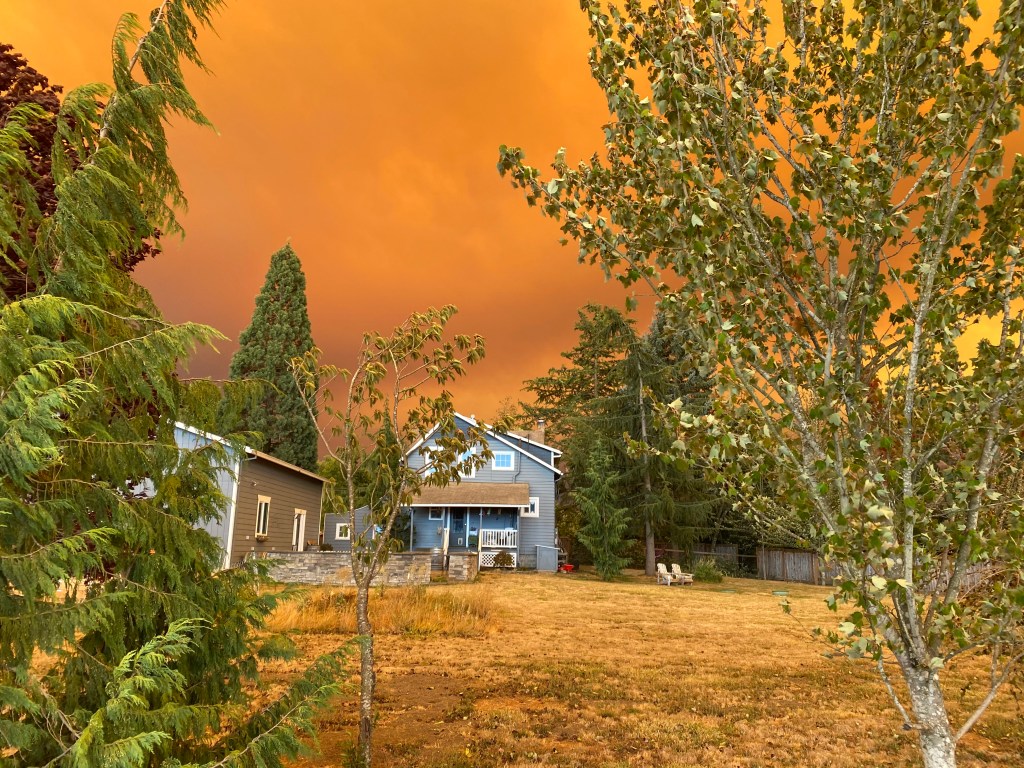
It’s been 72 hours since the first sign of smoke rolled in over our home in Newberg, Oregon and commenced the current nightmare situation we and our fellow Oregonians are experiencing.

No filter. This is our house on September 9, 2020.

I am exhausted – not sleeping well, my endocrine system is all over the place, I’m in fight/flight mode, I have been exposed to smoke, and I am on an emotional roller coaster.

My husband and I had to evacuate our charming, historic farm house in the Chehalem Valley on Wednesday with our toddler and puppy in tow because of poor smoke ventilation. It was heartbreaking to have to pack and leave. But we are situated a couple miles downhill from the Chehalem Mountain/Bald Peak Fire and the airspace above our property was completely overtaken by dramatic rolling smoke clouds and eerie orange light – the sky was dark and ominous – from the surrounding wildfires. Yes, it’s been feeling like the apocalypse as our whole western side of our beautiful state is up in flames!

I have been addicted to my CALM app. I’m listening to a meditation on anxiety right now.

One of my greatest gifts is my ability to reframe. I am resilient. I can get anxious and fall to my knees in one moment, but, with a little time, reflection, hope and faith, I can recover and react in a more calm and mindful headspace.

I have an education in holistic nutrition – from a functional medicine perspective in traditional clinical nutrition, but also a Traditional Chinese Medicine perspective. I know how to consider the whole being and how to take preventative care at all times and during all life phases or conditions.

So, after 72 hours of sinking inward, I have processed what I need to process about our current situation and now I am in holistic care mode.

There is so much that is out of my control right now. The only thing I can do is be proactive about the things I can control. Assessing what I know about fight/flight, stress/anxiety and a toxic environment (hazardous air pollution), I can make some powerful decisions to help keep me and my family as calm and safe as possible.

The Calm app is a great start. Worry and anxiety wreck havoc on the immune system. In fight/flight we know that we are not being chased by a tiger. But, when you are living in unpredictable conditions – like being surrounded by wildfires – well, you might as well be running from a hungry tiger. So, how can we ease the fears? Taking deep breaths (it’s hard when the air is heavy and toxic). But, create a clean space wherever you are – one room in a house, in your apartment, or in the evacuee’s case, in your hotel room. Set up a good, portable HEPA air purifier if you have one. Stay inside! Don’t burn candles or incense. Minimize your time outside. And do your best to meditate and stay calm. It is important for your heart health and general well being.

It’s not okay to exercise outside in this air pollution – so find other gentle ways to workout and move. Exercise helps in mindfulness, stress reduction and promoting a healthy heart and lungs. So maybe go gentle and do some stretching and light yoga at home. This all depends on your current health situation, assuming you do not have any chronic health problems. If you’re not sure what to do, ask your healthcare provider for advice on activity at this time.

One of the most powerful tools we have control over is what we eat (or what we don’t eat). Avoid sugar! It is super inflammatory. Choose healthy macronutrients – carbohydrates, fats and proteins. Now is not the time to start an elimination diet or to fast! Drink plenty of clean water.

Certain nutrients can help protect your body when you have some exposure. When you are living in the extreme conditions we are in, then some exposure is inevitable. Beyond limiting exposure, boost your health by adding these nutrients to your diet:

Vitamin C. Vitamin C is the ultimate anti-inflammatory agent! It’s an essential antioxidant. Smoke inhalation causes inflammation from oxidative damage to tissues. Antioxidants are nutrients that prevent damage caused by free radicals. Free radicals are created as your body metabolizes food or when you have been exposed to tobacco smoke or radiation (or, in our case, wildfire smoke).

Vitamin C is the ultimate antioxidant. If you choose to supplement, know it is safe to increase your dose up to what’s referred to as “bowel tolerance” (you want to avoid too much or else you will have loose stools) – at 3000 to 6000mg/daily in divided doses. Please talk to your healthcare provider before prescribing supplements for yourself, especially if you have a medical condition or if you are taking any medications.

Foods rich in Vitamin C:
Fruits: citrus fruits (orange, grapefruit) – skip juice, too much sugar; kiwi; mango; papaya; pineapple; strawberries; raspberries; blueberries; cranberries; watermelon and cantaloupe.

Vegetables: broccoli; Brussels sprouts; cauliflower; green and red peppers; spinach; cabbage; turnip greens; and other leafy greens; sweet and white potatoes; tomatoes and tomato juice; winter squash.

Other excellent sources of antioxidants:
Allium sulphur compounds:  leeks, onions and garlic
Anthocyanins: eggplant, grapes and berries
Beta-carotene: pumpkin, mangoes, apricots, carrots, spinach and parsley
Catechins: red wine* and tea – especially GREEN tea!
Copper: seafood, lean meat, milk and nuts
Cryptoxanthins: red capsicum, pumpkin and mangoes
Flavonoids: tea, green tea, citrus fruits, red wine, onion and apples
Indoles: cruciferous vegetables such as broccoli, cabbage and cauliflower
Isoflavonoids: soybeans, tofu, lentils, peas and milk
Lignans: sesame seeds, bran, whole grains and vegetables
Lutein: green, leafy vegetables like spinach, and corn
Lycopene: tomatoes, pink grapefruit and watermelon
Manganese: seafood, lean meat, milk and nuts
Polyphenols: thyme and oregano
Selenium: seafood, offal, lean meat and whole grains
Vitamin A: liver, sweet potatoes, carrots, milk, and egg yolks
Vitamin C: see above
Vitamin E: vegetable oils (such as wheatgerm oil), avocados, nuts, seeds and whole grains
Zinc: seafood, lean meat, milk and nuts
Zoochemicals: red meat, offal and fish

* wine can seem like a great “stress reliever” but keep in mind wine is alcohol and alcohol is super inflammatory, so, when trying to boost your health when there’s dangerous air quality, select other high antioxidant options at this time. And I’m a winemaker – trust me.

Vitamin D3. Vitamin D3 supports the immune system and is especially important when dealing with smoke inhalation, especially for those who have been diagnosed with a deficiency. If you live in the Pacific NW, chances are you’re deficient or should at least supplement, unless otherwise recommended by your healthcare provider. Recommended dosage – 5,000 to 10,000 iu/day with meals, unless otherwise instructed by your healthcare provider.
 
Glutathione. Liposomal glutathione detoxifies acetaldehyde and other smoke toxins and can prevent damage from inhalation. You should get this from your healthcare provider (most especially a naturopath or holistic practitioner).

Selenium. Selenium is another antioxidant that can help fight free radical damage and moderate cellular oxidative stress. Recommended dosage – 200mcg twice/day – unelss otherwise instructed by your healthcare provider.

Herbs. Green tea, ginger, and turmeric are highly effective in inhibiting the activation of carcinogens in environmental smoke. 
 
The biggest take away here is choose foods rich in antioxidants, select supplements to support your diet – but remember that it is not necessarily safe to supplement without the guidance of a healthcare provider – this is because some underlying conditions could have dangerous contraindications with certain supplements.

As helpless as you might feel during such uncertain times, making healthy, clean choices for you and your family can really feel proactive. Always choose organic when you can – you do not need the additional toxins from pesticides. Take a deep breath. We’ll get through this!

“Wine O’Clock” & The Winemaking Mama


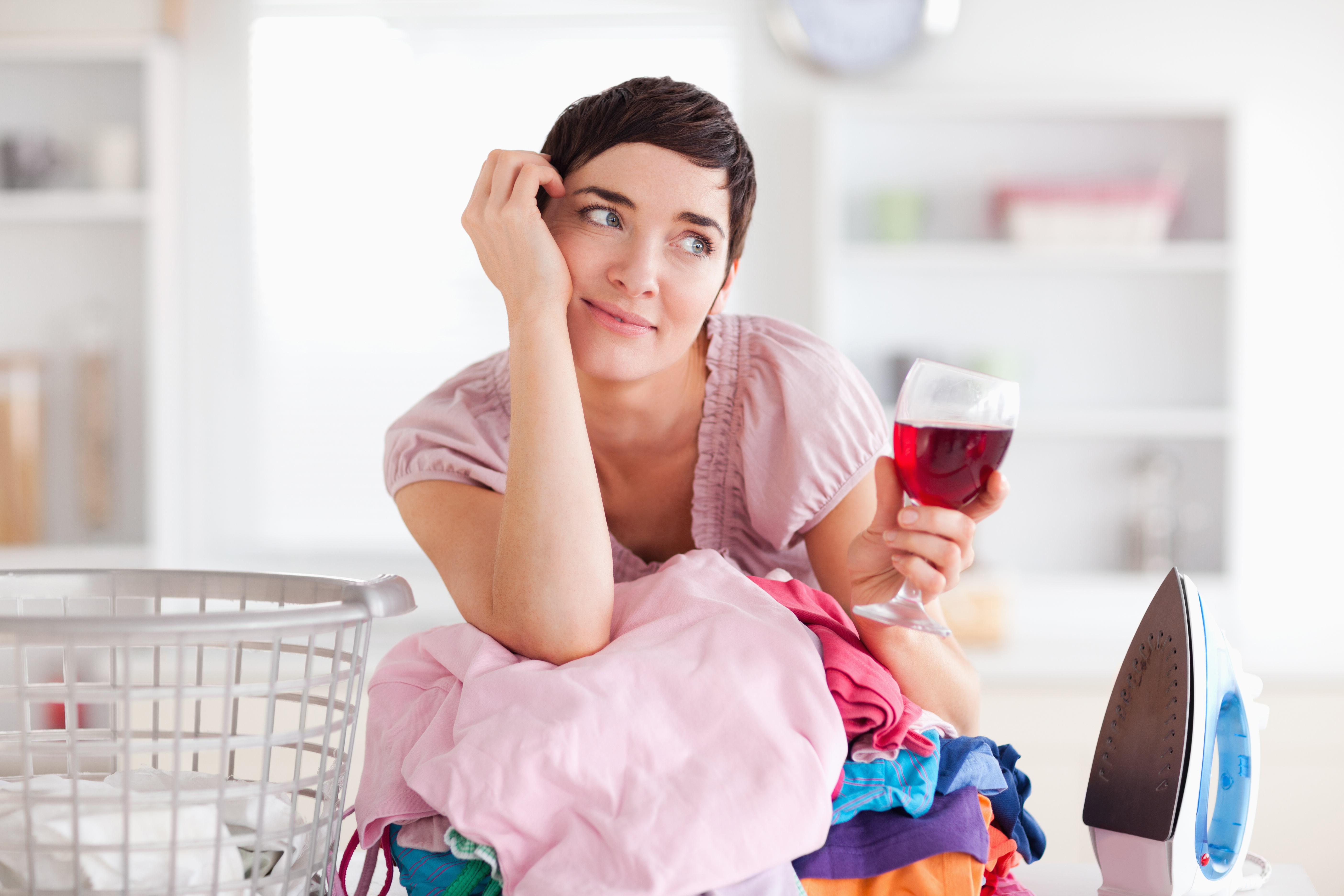
Woman with wine and a pile of clothes

Well – I think I may have finally come up with my podcast title – The Winemaking Mama!  I’ve been working on my vision board and mapping out what I want it to be… the name was the thing I was struggling with the most!  I can’t do “Pirate Princess Diaries” or “Pirate Princess Chronicles” because of Disney, mostly.  So, we’ll see if The Winemaking Mama makes the cut!

My husband likes the full title – Wine O’Clock & The Winemaking Mama…  That’s probably too long.  Short and catchy are always recommended.  But I digress…

I’m not writing today about my future podcast.  I’m writing about something much more difficult to unpack – women and the wine o’clock habit – and how it has become a problem for many women.

Exhausted mamas, I see you.  I’m one of you.

Many of us find ourselves wiped out by early evening (heck, by early afternoon!) and we find our way into the kitchen right on time for wine o’clock.  We look forward to it all day.  We need it.  It’s a kind of reward for the weary.

My husband and I are both in the wine industry.  For years I have participated in the enophile’s delight of discovering delicious wines from all over the world.  Wine o’clock could happen at any time of the day.  But there’s something about the happy hour time when wine o’clock falls in for most – it’s to unwind.

For us, drinking wine at the end of the day was not initially about needing to relax but, rather, about exploration and participating in our professional passion – enjoying wine.  We would geek out over special bottles, cool bottles, esoteric bottles, surprising mainstream bottles, and so on.  Over time, with a new child and mounting life responsibilities, the luxury of drinking wine for appreciation too soon morphed into our needing the time to unwind.

The thing with wine consumption for me – I would always mean to have just one glass.  I would tell myself – one glass only.  Or as my grandmother liked to say, “one and done!”

Moderation is key.  I was pretty good about keeping to my imbibing guideline.  Some days were more difficult than others.  Those days included better bottles we were not willing to waste or hold on to for multiple days, or multiple bottles that made their way onto our kitchen counter that we wanted to try.  So one glass would become two, or three, or a bottle.

By the time we decided to start a family, I was committed to an alcohol-free pregnancy.  I was an older mom-to-be so I felt it was imperative to cut out all the “no no’s” from my diet – including caffeine and alcohol.   And I did it.  Save for a few glasses of Champagne in my third trimester.  It was easy because I didn’t have a taste for wine when I was pregnant – white wines tasted like vinegar to me and red wines were just too much.  I could handle a little Champagne, but, it was kind of wasted on me because my palate was not in its prime form with all of those pregnancy hormones surging through my body.

I had no taste for or interest in wine after my baby way born, either.  I didn’t drink during his first year.  I believe I sipped on a few glasses here and there, but, I could not drink an entire glass of wine.

When the coronavirus hit in March, my baby was fifteen months old, and the stress of our lives and our world drew me back to wine o’clock.  It started off innocently enough, with just sips.

My husband and I embarked on a virtual world tour while sheltering in place – and we cooked up dinners with recipes from cities we’d “visit” and we’d pair our international meals with wine.  At first, I just sipped.  As the pandemic continued to ravage the world, my sips stretched out to a glass, then two.  I had the will power to maintain my two glass maximum.  But because I didn’t have much of a tolerance for alcohol anymore, I would feel groggy and worse for the wear.

The wine o’clock happy hour did not last long.  Here we are at the end of June and I’m back to sipping no more than a glass, as max.  And not every day.  I sip on wine maybe three days a week.

This isn’t about my exercise of self control.  This is about my body’s rejection of something I have loved for years, something I MAKE professionally.  My craft is winemaking!  How surreal to make wine professionally but no longer to have the desire to drink it with the passion, curiosity and pleasure I once had.

I guess this is my new mantra:  I’m a winemaking mama that doesn’t really enjoy drinking wine anymore – beyond sips for personal discovery and professional evaluation.

This is important because I’m not just a winemaking mama.  I own my own wine business.  I market and sell my wines to stay in business.  Many of my customers are wine o’clock women.

I have considered the philosophical “liability” of producing and selling alcohol – many times.  I’ve sat with my feelings of  guilt and discomfort about it – many times.  I have loved ones in my circle with drinking problems and with alcoholism.  I have issues with loved ones who make choices that impact me and my family negatively.  And I try to be compassionate towards those I love who have problems with alcohol consumption.

If you open up Facebook  you’ll see many conflicting articles getting tossed around – especially if Facebook recognizes you as a wine professional or enthusiast.  Some will say drinking wine will extend your life, drinking wine is good for heart health to drinking any amount of alcohol is toxic.  You get marketing coming from every angle.  How do you know what’s true?

I will put on my holistic nutritionist hat and say that alcohol causes inflammation and should be consumed mindfully based on your bio-individuality.  Some people should avoid alcohol at all costs.  Alcohol is safe for the majority of adults.  Finding moderation for your body type, life stage and other bio-individual requirements can be assessed by a healthcare professional.

Today, a new Facebook ad found its way into my feed – “Wine O’clock a Habit?” sponsored by SoberSis (www.sobersis.com).  The attractive woman on the video looked like one of my fellow woman’s college alumna in a preppy hot pink t-shirt, pearls and a ball cap.

I’m sometimes a sucker for good click bait.  So I scanned some of the posted comments and then clicked.

What struck a cord with me was the normalcy of the behavior this woman addressed.  She was describing herself, but she was describing me and many of my women friends who would start the day with good intentions, following mindful practices throughout the day – working out, drinking green juice, thinking good thoughts – and but still finding the that glass of wine at the end of the day.  She describes the delicate way wine o’clock controls you.

Psychological connection to wine o’clock gets unpacked and SoberSis has tools to help women break the habit.

This post is not a constructive critique of or endorsement for SoberSis and her tools.  It’s about the conversation about women and wine o’clock and an important word she’s using that is not just a smart marketing tool, but a real connection (best way semantics can work out) – and that’s using the word sis.

Women do a pretty good job with reaching out for help.  Women do support groups better than our male counterparts.  Women seek out community and… sisterhood.

I must admit, it makes me a bit sad when I see the need for this type of program.  This isn’t about Alcoholics Anonymous.  And I’m not even suggesting a pay-to-play platform for managing a drinking habit is the answer for anyone.

I am simply relating to the problem.  I am humbly exploring my role in this problem, as a winemaker and wine marketer and wine seller.  In a perfect world I could make, market and sell my wine to women without any concern, assuming my customers all practice safe and moderate drinking practices.  But I know better.  I know that some women really struggle and secretly wish they didn’t have wine stocked up in their homes as they wait for wine o’clock to come each day.  Many of these women wake up in the morning feeling horribly hungover and full of regret.  Many will say – no more.  Today I will not drink wine but then will arrive at wine o’clock with a full glass.

I’m not sure what to say right now.  Because I know there are many sides to the wine o’clock women out there.  Some really have fun and feel good about their decisions to imbibe regularly at their special designated time.  It’s a feel good ritual no matter how many glasses are enjoyed.

I hate preachy talk about drinking and I avoid it at all costs.  To quote my favorite online yoga guru Adriene Mishler (yogawithadriene.com) – “find what feels good.”

I want to remove all judgements about wine o’clock.  I’m not sure how I feel about SoberSis’s unpacking of wine o’clock.  If her platforms helps some women find healthy balance and happiness and good health that is a win.  I hope her message isn’t about making wine consumption a shameful practice.

This encourages me to continue my own exploration of what it means to be a winemaking mama.   I can sit with my previous feelings of guilt and concern and reframe them into cultivating positive wine o’clock experiences.

Perhaps I’ll launch a healthy “Wine O’Clock Wellness Circle for Women” group for my podcast subscribers!  This may need some word-smithing.  But you get the idea.  It can be an invitation to come right where you are right now and be well with it.  No shame.  No guilt.  But healthy balance for what feels right for you.  If one glass feels right, you are welcome; if four glasses feels right, you are welcome.  You just have to be present with your choices and clear about your intentions to bring joy and a little to your life.

Perhaps I’ll invite Adriene to do a yoga opening and lead a gentle mantra about “finding what feels good” when treating yourself to that glass of delicious wine and even have SoberSis chime in about balance and retaining the control you want with your wine enjoyment.  I think there’s a lot of potential here to pivot a little, to change the narrative and move from habits that no longer serve us.

This is not for everyone and it’s not meant to judge or shake a finger at those who love their wine their way – I feel compelled to keep reiterating that point.   It’s really about Yoga Adriene’s mantra – “find what feels good” – and if you should so happen to shift from your feel good place to another – you can find community and sisterhood as easy as online.


I