
Navigating Burnout: A Look at What Has Happened To Working Moms
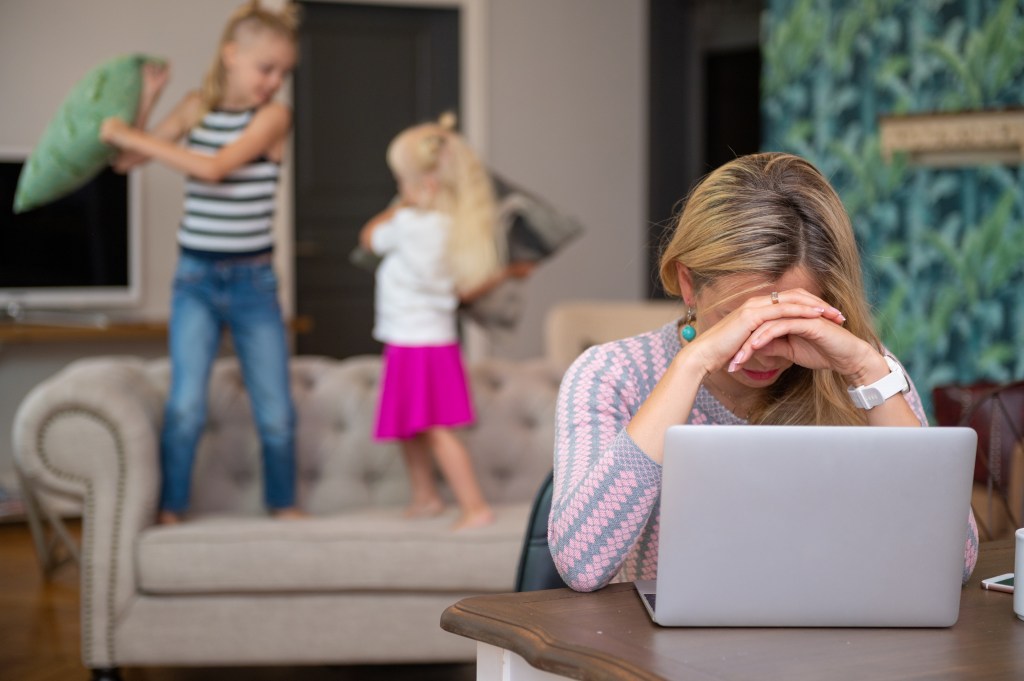
I have been doing a deep dive into subjects that I relate to as a working mom and mompreneur. I used to hate that term, but, nothing else sufficiently defines owning a business in the midst of motherhood.
Since becoming a mother in 2019, followed by barely running my business in a postpartum fog followed by the blind-sided devastation of the pandemic, and now a pseudo aftermath, because let’s face it, we’re still in the pandemic’s trenches, there is an evermore cycle of doom burgeoning each season of this heavy, existential American life: from gripping financial stress and potential crisis, to ominous murmurs beating a world war drum, to new and emerging dangerous diseases and ongoing viral variants, and even the constant doomsday analysis on Covid-19, like the research findings on long Covid mingling with heart disease and strokes, and, and, and …
Our tender hearts are in peril and what kind of repercussion is this having on our collective soul?
Parents of young children were taken on a bleak journey in the winter of 2022, just before the holidays, with three viruses that could send your babies to the emergency room: new Covid-19 variants, the flu, and RSV.
I keep asking myself – when will this stop? When can we release ourselves from chronic fight or flight mode? When can we breathe again and settle into a less threatening reality?
If you follow astrology, you might feel compelled to claim having an answer to this paradox. I’m sure there’s plenty written in the stars that align with all of this chaos – energetically speaking.
As a mother, navigating through life with all of this is painful, scary and overwhelming. It’s hard enough to bring a child into the world and have to put your heart, duty and every last effort toward raising good humans. But, everything about the pandemic and trying to manage life beyond it has put all kinds of burdens and obstacles in the way of everyone, but especially on working moms. Data supports this, as an unprecedented number of working moms fled the workforce to support the fragile family household system with little to no choice due to the patriarchal structure that has never truly supported working moms. Worse is the emotional toil all of this has placed on mothers.
The reality is that far too many working mothers have devolved into a burnout crisis.
It’s interesting to take a look back on the past couple of years, well into the pandemic, to examine what has happened to working mothers. I think this is an important exercise because as we cycle through another Women’s History Month, I can’t help but to ask how are we doing? How are we really doing?
According to Pew Research Center, the coronavirus pandemic has created new challenges and reinforced existing ones for many working mothers in the United States.
According to a Pew Research Center October 2020 survey, “among working parents with children under age 18 at home, mothers were generally more likely than fathers to say that, since the beginning of the coronavirus outbreak, they faced a variety of professional challenges.”
“Earlier this year, about half of working parents said the coronavirus outbreak had made it difficult to handle child care responsibilities, and moms were especially likely to report this problem. Around six-in-ten moms (58%) said this had been at least somewhat difficult in recent weeks, compared with 43% of working dads, according to a February 2022 survey of working parents with children younger than 12 at home.” (Pew Research Center).
According to Rutgers Today, “In 2020, women with school-age children definitely experienced a ‘COVID motherhood penalty,’ said Rutgers-New Brunswick professor Yana Rodgers, as evidenced by growing gender gaps in employment/population ratios and working hours.”
The trends continued to be unfavorable for working moms.
“Working mothers have suffered greatly during this pandemic. Many left the workforce or put advancements on hold while educating/caring for remote students or struggling to find childcare. According to new research by the National Women’s Law Center, post-pandemic job recovery has been slower for women, with over a million men joining the labor force last month compared to only 39,000 women.” (Rutgers Today).
While Rogers predicted last year that, ultimately, “COVID-19 may shift social mores and workplace policies that positively impact working women in the long run,” the imbalances for working mom had serious effects, namely burnout.
Based on a report by McKinsey & Company, “… while the COVID-19 pandemic has affected us all in innumerable ways, the impact has been especially acute for women. Mothers of young children experienced burnout more often, for instance, and were more likely to have considered leaving their careers compared to fathers of young children. They also assumed more of the household responsibilities during the pandemic period.”
Earlier in that year, The McKinsey Podcast reported on the state of burnout for working women. Senior partners and leaders Alexis Krivkovich and Lareina Yee joined host Lucia Rahilly, global editorial director, to discuss some of the startling and hopeful results recently released in the Women in the Workplace 2021 report. As part of their research, their team interviewed a variety of women across corporate America on the topic of burnout. This podcast is not just a great assessment about working mothers, but for intersectional women, including women of color and LGBTQ+ women.
The research shows that the burnout gap between women and men has almost doubled since last year’s report. Why are so many women so tired?
According to Yee, “Women are hanging on. And that is probably the most blunt and simple way to put it. Forty-two percent of women report being burned out. So a little under half of your population of women are burned out. And that’s where we stand today.”
“One in three women, and 60 percent of mothers with young children … spend five or more hours a day on housework and caregiving. Five hours a day is at least another half-time job. And COVID-19 sort of stripped bare for us what was already under the surface and well understood by every working woman I know, which is how imbalanced those responsibilities outside the workplace are. Because these imbalances are not well recognized, and historically companies have not played a role in feeling a responsibility for that.” (The McKinsey Podcast).
The impact of the pandemic on working mothers has had such a profound effect, it’s a topic with long lists of journalism titles from a simple Google search. Now that American companies are trying to return to life before the pandemic, as if it never happened, there are harsh repercussions on mothers who have figured out balancing work and family in the couple years of remote work.
This year, Time Magazine reported, “As People Return to Offices, It’s Back to Misery for America’s Working Moms” with an ominous prediction: “Evidence suggests that the increase in companies enforcing return-to-office mandates may drive American mothers out of the workforce at a crucial moment.”
Think about this:
“I’ve talked to women who could hide their pregnant bellies from their coworkers, who wondered if their promotions might not have happened had bosses known sooner that they’d be out for maternity leave. Women who had morning sickness and could puke in the comfort of their own bathrooms. Women who didn’t have to decline meetings that began at 4:30, worried about the complicated math of train times and daycare pickup. Working from home, in short, allowed them to hide the evidence of the competing priority that is motherhood, which of course was good for their careers.” (Time Magazine).
The intensity of burnout is being felt now more than ever.
From an article published by Best Colleges, “burnout specialist Dr. Jaqueline Kerr identifies four chronic stressors that contribute to Working Mom Burnout and offers some actionable solutions. Working moms are dealing with four chronic stressors: parenting burnout, occupational burnout, barrier burnout, and crisis fatigue.“
“Kerr has made it her mission to save other working moms from the ravages of burnout.” There’s a lot to unpack in this article.
“According to the 2021 Women in the Workplace Report, the “burnout gap” between men and women has nearly doubled since 2020… with working moms are 28% more likely to experience burnout than working dads.” (Best Colleges).
“The Melbourne Institute discovered that working parents have experienced more mental distress since the start of COVID-19 than working professionals without children.” (Best Colleges).
“Women have always done a disproportionate amount of the unpaid labor at home,” said Kerr. “It starts from the very beginning, especially if the mother takes time off from work to be with the baby and the father doesn’t. She becomes the default manager of all the things: doctor’s appointments, childcare, schools, camps, playdates, medications, sleep, and eating schedules. Even if her partner shares responsibilities, it isn’t the same as managing that mental load. It’s a full-time job.” (Best Colleges).
“Mothers also bear the lion’s share of the family emotional load — a burden that got even heavier during the pandemic… The kids were distressed; normal boundaries went out the window. Working moms had to be emotionally present for struggling kids while simultaneously managing their own mental health and trying to excel in their jobs. Moms are exhausted.” (Best Colleges).
“Overwork, lack of autonomy, and lack of recognition contribute massively to burnout. Anyone can experience these things, but working moms are more likely to because they aren’t moving up the ranks,” accordion to Kerr.
“Companies often fail to value the unique skills mothers bring to the table. A really good example of that occurred during the pandemic, when women did a much better job of looking after the well-being of their teams. Employee well-being affects the bottom line, but only about 25% of companies reward that kind of work. Women are spending a lot of energy doing crucial but undervalued and under-rewarded work.”
Then, consider this:
“Childless women are 8.2 times more likely to be recommended for promotion than equally qualified mothers. … Mothers are recommended to start at significantly lower salaries than childless women, childless men, and fathers. … Mothers are perceived to be 12% less committed to their jobs and 10% less competent at those jobs than childless women. (By contrast, fathers are perceived to be 5% more committed to their jobs than childless men.”
Finally, and here’s the real clincher for me: with crisis fatigue on mothers, sending kids into a scary world produces perhaps the worst burnout.
- “It’s always been tough to send our kids out into the world. But since March 2020, it’s been excruciating: Waiting to understand how the pandemic would impact children, waiting for them to get access to vaccines, and waiting to learn what long-term effects a COVID-19 infection might have on their developing bodies. There’s still so much we don’t know.”
- “Pandemic stress has been chronic,” said Kerr. “We’ve undergone constantly changing recommendations, constantly changing norms. Uncertainty is something human beings cope with very poorly. Uncertainty about threats to our children is a major source of fear and stress.”
- On top of the invisible but ever-present danger of COVID-19, we are also coping with a school shooting epidemic. “As a result, ‘out there’ — away from Mom’s watchful eye — has become more threatening than ever. Moms are tasked with determining what precautions will keep their families safe in a scary world — an impossible burden,” said Kerr.
- “It’s important to realize that as a white mother, I have a certain level of fear for my children. It’s constant; it’s distracting. But that intense surge of fear that we all experienced in the aftermath of Uvalde is very real at all times for Black mothers. Statistically, the chances that their children will be victims of gun violence are much higher. Crisis fatigue is a daily reality for those moms even in ‘normal times’ — an added layer of emotional exhaustion, a terrible strain.”
Crisis fatigue is the worst cause for burnout because there is no control over the outcomes and there is no fix or solution.
“Some things we can’t just fix without collective action, collective political will. But empathy can be very powerful, so take a moment to recognize that people you know are living this reality all the time,” said Kerr. “Being seen means a lot.”
So, what exactly is burnout and what does it effect your physical, mental and emotional wellbeing?
Psychology Today defines burnout as “a state of emotional, mental, and often physical exhaustion brought on by prolonged or repeated stress. Though it’s most often caused by problems at work, it can also appear in other areas of life, such as parenting, caretaking, or romantic relationships.”
The root of burnout, according to Psychology Today, is “the cynicism, depression, and lethargy that are characteristic of burnout most often occur when a person is not in control of how a job is carried out, at work or at home, or is asked to complete tasks that conflict with their sense of self. … Equally pressing is working toward a goal that doesn’t resonate, or when a person lacks support. If a person doesn’t tailor responsibilities to match a true calling, or at least take a break once in a while, they could face burnout—as well as the mountain of mental and physical health problems that often come along with it, including headaches, fatigue, heartburn, and other gastrointestinal symptoms, as well as increased potential for alcohol, drug, or food misuse.”
How can you tell if you’re burned out? According to Psychology Today:
“Physical and mental exhaustion, a sense of dread about work, and frequent feelings of cynicism, anger, or irritability are key signs of burnout. Those in helping professions (such as doctors) may notice dwindling compassion toward those in their care. Feeling like you can no longer do your job effectively may also signal burnout.”
And how do you tell the difference between burnout and stress? Psychology Today differentiates the two:
“By definition, burnout is an extended period of stress that feels as though it cannot be ameliorated. If stress is short-lived or tied to a specific goal, it is most likely not harmful. If the stress feels never-ending and comes with feelings of emptiness, apathy, and hopelessness, it may be indicative of burnout.”
As we have learned from the pandemic, jobs are clearly not the only source for burnout. Psychology Today addresses non-work related burnout:
- “Parents, partners, and non-professional caregivers can also experience endless exhaustion, feel overwhelmed by their responsibilities, or secretly believe that they have failed at their role. These forms of burnout are referred to as parental burnout, relationship burnout, and caregiver burnout respectively.”
- “Non-work burnout, however, is less well-known than that caused by career stress. Stereotypes and stigma—particularly related to parenting—can make those suffering from non-work-related burnout feel as if they are to blame for their challenges. As a result, they often hide their struggles from others.”
- “But burnout, in any form, can have severe consequences if left untreated. Discussing it openly—either with a spouse, family members, friends, or a therapist—is often the first step to addressing its symptoms, getting needed help, and avoiding negative outcomes.”
Burnout is a scary thing to sit with, as it can have harmful outcomes. But the overwhelming feeling of helplessness is what is seemingly impossible to resolve without taking drastic measures.
As I navigate my own burnout, I am constantly dealing with a heavier anxiety on top of my usual health and wellness challenges, including managing autoimmune diseases and hormonal imbalance. I have had stress from my bout with Covid-19 last year, including strange abdominal cramping and pain, sending me to the hospital, and worry around heart health, with unusual symptoms that were likely stomach related – issues I had never had before the pandemic. The constant worry for my child’s safety is ongoing (see crisis fatigue above).
While the world continues to move forward and attempt to return to the quality of normalcy prior to the pandemic, I am stunned by the regression. I thought events like a global pandemic would change people and society for the better. But, remember when World War I was supposed to be the war to end all wars. How naive – or, worse, what a misguided and dangerous campaign slogan for war. I am looking at all of this through a lens of my own burnout, so it goes without saying that I don’t harbor a sensibility of much hope. Instead, I see the world through dark glasses: one that simply cannot and will not learn from history or its mistakes and tragedies. Humans are flawed, for certain. But, perhaps the worst flaw is our collective inability to truly grow and change. History repeats itself over and over again. Cynical, sure. But, when well-intentioned, peace loving people have no control over what’s at stake, say, as what is going on in Ukraine and what’s bubbling in the South China Sea, it’s pointless to have faith in humanity at all.
The burden of burnout rests on all of us. It’s a collective illness we all share in some way, we are all responsible for it. Ignoring harm done to others is the basis of burnout onto others. We blame institutions, corporate greed. political opposition for what’s wrong with society. But, people are what’s wrong with society. People. Those perceived as good and bad. All people. We are all contributing to the out-of-balance destruction of humans and humanity. Until the collective consciousness evolves to another level of compassion and human connection – a we are all in this together consciousness – life on earth, the human experience, will continue to churn out pain, suffering, anger, resentment, jealousy, greed, and so on. You can’t point your finger at the ones you desire to blame. Pointing your finger points equally to yourself.
Women’s History Month. It’s kind of sham. It’s fine to take a moment to reflect on women in history. The truth is that women have always held a far more important role in human history than they were ever credited for, so, it’s imbalanced to simply highlight the work of some distinguished and revered contributors to society like Marie Curie, Harriet Tubman and Judge Ruth Bader Ginsburg. The work of women goes deeper than those who have excelled in accomplished vocations. What about valuing the work of women at home? What about taking on greater consideration for women’s healthcare and wellbeing? What about applauding women for driving ideals like compassion, collaboration and community in our society? We don’t have to clap hands for women who have made history, but elevate women for having always contributed to the human story.
We have a lot of work to do to appropriately appreciate and better care for women. One way to elevate women this month is to address this dangerous burnout issue for working moms. It may not seem like much to childless individuals or top male executives or our political leaders – anyone who’s not a working mom. But everyone is touched by this burnout crisis. Raising good humans is a critically important job; giving women the space to succeed at work and at home is not asking for much. And yet it may be one of the most critically important issues facing humanity today.
Resources:
+ “Working moms in the U.S. have faced challenges on multiple fronts during the pandemic” by Katherine Schaeffer for Pew Research Center, May 6, 2022.
+ “”COVID Motherhood Penalty” Set Working Moms Back” by Lisa Intrabartola for Rutgers Today, February 14, 2022.
+ “Parent, employee, all of the above? Eight working mothers on the realities of post-pandemic life” edited by Justine Jablonska for McKinsey & Company, May 6, 2022.
+ “The state of burnout for women in the workplace” from The McKinsey Podcast with host Lucia Rahilly, January 4, 2022.
+ “As People Return to Offices, It’s Back to Misery for America’s Working Moms” by Alana Semuels for Time Magazine, February 2, 2023.
+ “Working Moms Have a Burnout Problem” by Meg Embry for Best Colleges, June 29, 2022.
+ “Burnout” according to Psychology Today
 COSMIC BITS