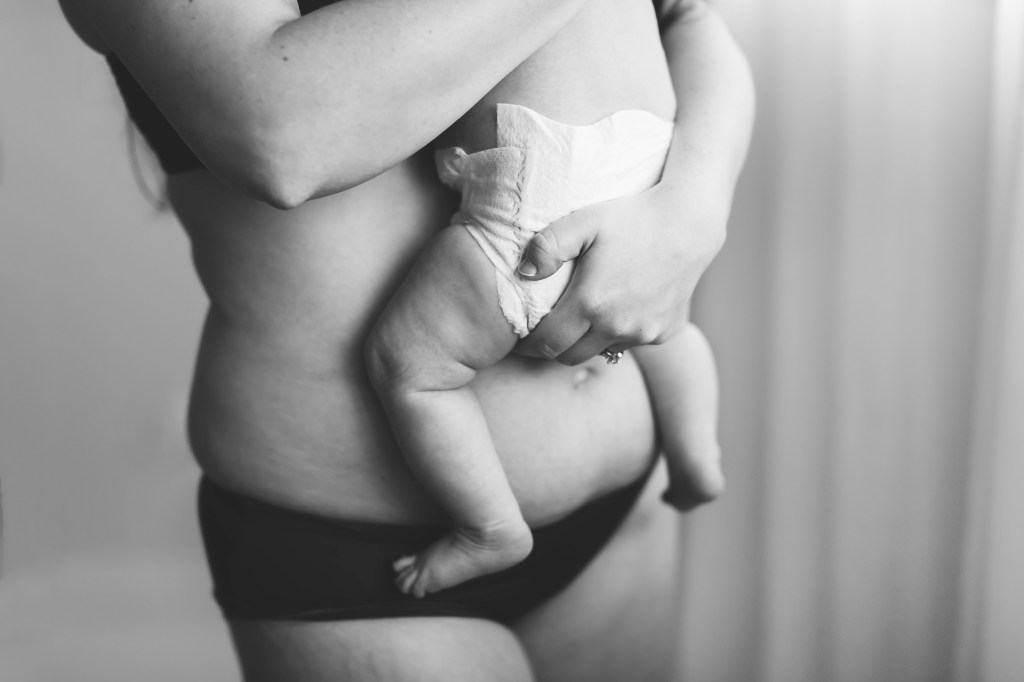
FIVE Postpartum Things I Learned From My Personal Trainer

woman chats with her personal trainer online

My postpartum journey has been going on for four years now. I struggled in my new body to rediscover what kind of exercise and movement was best for me. Prior to my pregnancy I had been an avid runner and gym-goer. But those former workouts were no longer working out for me.

I walked outside a bit and kept most of the weight off from nursing. But once the weening process began, with another round of hormonal havoc, along with low activity during the pandemic, I had packed on some pounds. Worse, I didn’t feel strong in my body. I felt broken. My postpartum injuries and pain were fully felt.

In the summer of my child’s second year I was visiting family and my cousin asked me if I wanted to join her for a thirty-minute workout with her personal trainer. It was a rewarding workout on her wrap-around porch and it made an impression on me. I wanted the convenience, ease, expertise and personal attention of a personal trainer, too!

I had looked for months, to no avail. I specifically wanted to find a female personal trainer out in wine country who would come to my house. Eventually I was able to manifest what I put out for the universe to work into place for me. I was on LinkedIn looking up something business related when I found Katie. I was looking for a personal assistant, at the time, but, for some reason (a-hem – the universe working its magic!) a personal trainer also came up in my search. Curious, I messaged Katie and she got right back to me. I quickly learned that while she lived in Oregon, too, we would workout virtually – which was even better for me! Further, I could actually afford the transaction.

Three and a half years after giving birth I started my first session with Katie. And it has been a life changing, mutually beneficial relationship. We have become friends and allies. Katie continues to help me on this journey of reclaiming my body, my strength, my balance, my endurance and my confidence. Along the way, she made some profound observations regarding my postpartum health and wellness, specifically with my hip pain, diastasis recti, and pelvic floor weakness – things completely ignored by my postpartum and family medicine healthcare providers. She helped me to finally recover and thrive.

Here are five amazing things I learned from my personal trainer that helped me to finally enjoy a full recovery from postpartum injury and trauma.


BRACE YOURSELF!
Brace your core, that is. My trainer advised that I not only brace my core when engaged in our workouts, but, to use this practice through out my day – walking up and down the stairs, doing laundry, washing the dishes, making dinner, in the shower, in the care, in line at the grocery store – anytime. For those new to this concept, bracing your core is mostly associated with the practice of contracting the muscles around the spine to created a tight midsection often engaged when bending your knees to lift something heavy. This prevents back injury. But bracing your core is also a great engagement during your workouts to build the abdominal muscles while in yoga positions or other functional training. This creates stability around your spine. After growing a baby, your core gets moved around and your abdominal muscles relax. Part of the recovery from childbirth is your organs and muscles eventually fall back into place. But this doesn’t always happen perfectly. Strengthening the core should be a part of every postpartum woman’s eventual workout regimen (when cleared by healthcare provider). Bracing the core supplements all core training and really supports all of the spots a postpartum woman needs to focus on – including pelvic floor and diaphragm.


RE-LEARN HOW TO BREATHE!
When you are in your third term of pregnancy your breathing changes. Your baby is taking up more real estate, your diaphragm and lungs are not in the same space for deep, whole core breathing. Your body naturally adapts – and the crazy part? You don’t even realize your breathing has changed to compensate for your baby’s growth. The way you breathe starts higher up, and you often lift your shoulders up to pull in a “deep” inhale. Your exhale is short. Women tend to carry on breathing this way long after baby has been born. One day, I mentioned to my personal trainer that I often felt discomfort whenever I had to do forward bends. Not pain. Just a weird feeling as I folded over the top of my belly under my breasts. It was my postpartum bump that never fully went away. She paused for a moment and told me she believed it had to do with how I was breathing. She said it was my diaphragm that was causing the discomfort. And then I learned about diaphragmatic breathing. This became a deeply emotional recovery because I carried on breathing the wrong way for over four years. I was breathing wrong during horrible head colds and even when I was sick from Covid-19. I often felt like I was suffocating whenever I was congested and sick. Diaphragmatic breathing was so foreign to my body that I had to totally re-learn how to breathe in expanding my tummy like a balloon, a movement that engages your entire core and pelvic muscles. The exhale is long, slow and works its way all the way back up your core. It’s an exercise in itself! I wrote about the importance of diaphragmatic breathing and how it’s the most important practice for postpartum healing – which you can read all about here.


TUNE INTO THE MOON!
You don’t have to follow astrology or understand it completely to receive the benefits of what the universe is energetically delivering for us. I happen to have a personal trainer who is deeply engaged in astrology and I am very interested in metaphysics and certainly the greater impacts around us that can work for us – and sometimes against us. But, my trainer taught me that customizing our workouts to the rhythms of the universe – especially lunar cycles – can really have an impact on outcome. Full moon? New moon? She can create a bespoke workout to address my needs. She knows my birth chart and considers sweeping cosmic changes that are going on for me when she considers what type of workout would be best. I may need more of a restful workout with deep stretching. Or, I may need to get my heart rate going and double down on strength training. I can feel a difference when my workouts are in synch with greater energies of the cosmos versus when I would throw down a workout that poorly coincided with astrological activity – symptoms of feeling drained, over-tired, challenged with recovery, or not feeling like I got enough from my workout – all of these things have happened when I wasn’t working out with metaphysical rhythms. It’s amazing and not so surprising, if you think about it. There is a certain grace that can be experienced when one is in tune with the shifting energies around us. I also consider my water intake during and following workouts in response to the lunar cycle. We know how deep the water/moon connection is – and what this means for flushing out our kidneys, etc. Traditional Chinese Medicine holds an ancient, deep philosophical and medical understanding of the connection of astrology and physical well being that fully supports this practice.


LESS IS MORE!
Many women fall victim to the assumption and pressure that they must rid themselves of the baby bump and baby weight as soon as possible. There’s shame around the changed body of a new mother and baby weight is often regarded as fat. This is horrible on so many levels. Healing is often disregarded in exchange for body dysmorphia. Postpartum hormones can dangerously play into the negative self talk. Body acceptance is so critically important. And beyond that acceptance, a newfound appreciation, awe, and gratitude for creating and growing another human being are necessary for self love. I’m so relieved that I never cared about the aftermath of my postpartum body. I mean, I was deep in the process of needing to heal. There was no time or energy to worry about how I looked. Instead of trying to implement the over the top workouts that were part of my pre-pregnancy routine – running, working out at the gym and regular yoga classes – I let go of the virtues of hard core. I look at movement differently – how I get it, where and when I get it. Instead of hitting the pavement or treadmill hard, opt for long walks outside or nature hikes to get in some forest bathing. I make it a priority to engage in movement that I enjoy. Part of my movement routine includes two thirty-minute workout sessions a week with my personal trainer and we mostly cover functional strength training aiming to heal and strengthen my core, pelvic floor and hips. We get a lot in during those sessions, with exercises that typically are two-for-one, meaning they engage core and get my heart rate going or they stretch my hips while adding a little strength training for my arms, and so on. I’m getting the most holistic workouts and I’m not putting in the same frenetic energy as I once did, and I’m still getting great results!


HIPS DON’T LIE!
Hips are getting a lot of attention in the fitness and physical therapy world. It’s not just pregnant and postpartum mamas needing extra care there. There’s all kinds of information out there about the somatic relationship of pain, trauma and our emotions being stored in our hips. Which means our hips are also a great wellspring for offering deep, emotional healing. In my case, I experienced birth trauma and a hip injury during labor. In addition to the normal pressure pregnancy puts on our hips, I was carrying the weight of a lot more trauma and emotional stress that got stored into my hips. The good news is yoga instructors and certain personal trainers can gently address the hip pain and somatic tension, pressure and blockage. My personal trainer has been a champion in the area of healing for me. We have worked on various stretches that have put me in poses that immediately released pain – not just physically but emotionally. I would often get tears in my eyes for no reason while holding certain positions that opened up my hip joints. Whether engaged in dead bug, airplanes, hula hoop circles – my trainer has an endless list of moves that strengthen, stretch and relieve the hips. It’s been incredibly therapeutic. Plus, when I brace my core and practice diaphragmatic breathing while holding these hip positions it’s like the heavens have opened up and filled me up with the most intense, beautifully healing and strengthening light and energy offering deep healing through and through.

The important thing to point out here is that I would not have come to many of these conclusions on my own. I didn’t know what I needed – even though I’m a former athlete and coach. Postpartum recovery isn’t always intuitive and in most cases we don’t know what we don’t know! I highly recommend finding a personal trainer or yoga class that expertly works with postpartum women to recover, heal and find new strength in a new and glorious body.

Women’s History Month

Navigating Burnout: A Look at What Has Happened To Working Moms

Exhausted mother trying to work from home

I have been doing a deep dive into subjects that I relate to as a working mom and mompreneur. I used to hate that term, but, nothing else sufficiently defines owning a business in the midst of motherhood.

Since becoming a mother in 2019, followed by barely running my business in a postpartum fog followed by the blind-sided devastation of the pandemic, and now a pseudo aftermath, because let’s face it, we’re still in the pandemic’s trenches, there is an evermore cycle of doom burgeoning each season of this heavy, existential American life: from gripping financial stress and potential crisis, to ominous murmurs beating a world war drum, to new and emerging dangerous diseases and ongoing viral variants, and even the constant doomsday analysis on Covid-19, like the research findings on long Covid mingling with heart disease and strokes, and, and, and …

Our tender hearts are in peril and what kind of repercussion is this having on our collective soul?

Parents of young children were taken on a bleak journey in the winter of 2022, just before the holidays, with three viruses that could send your babies to the emergency room: new Covid-19 variants, the flu, and RSV.

I keep asking myself – when will this stop? When can we release ourselves from chronic fight or flight mode? When can we breathe again and settle into a less threatening reality?

If you follow astrology, you might feel compelled to claim having an answer to this paradox. I’m sure there’s plenty written in the stars that align with all of this chaos – energetically speaking.

As a mother, navigating through life with all of this is painful, scary and overwhelming. It’s hard enough to bring a child into the world and have to put your heart, duty and every last effort toward raising good humans. But, everything about the pandemic and trying to manage life beyond it has put all kinds of burdens and obstacles in the way of everyone, but especially on working moms. Data supports this, as an unprecedented number of working moms fled the workforce to support the fragile family household system with little to no choice due to the patriarchal structure that has never truly supported working moms. Worse is the emotional toil all of this has placed on mothers.

The reality is that far too many working mothers have devolved into a burnout crisis.

It’s interesting to take a look back on the past couple of years, well into the pandemic, to examine what has happened to working mothers. I think this is an important exercise because as we cycle through another Women’s History Month, I can’t help but to ask how are we doing? How are we really doing?

According to Pew Research Center, the coronavirus pandemic has created new challenges and reinforced existing ones for many working mothers in the United States.

According to a Pew Research Center October 2020 survey, “among working parents with children under age 18 at home, mothers were generally more likely than fathers to say that, since the beginning of the coronavirus outbreak, they faced a variety of professional challenges.”

“Earlier this year, about half of working parents said the coronavirus outbreak had made it difficult to handle child care responsibilities, and moms were especially likely to report this problem. Around six-in-ten moms (58%) said this had been at least somewhat difficult in recent weeks, compared with 43% of working dads, according to a February 2022 survey of working parents with children younger than 12 at home.” (Pew Research Center).

 According to Rutgers Today, “In 2020, women with school-age children definitely experienced a ‘COVID motherhood penalty,’ said Rutgers-New Brunswick professor Yana Rodgers, as evidenced by growing gender gaps in employment/population ratios and working hours.”

The trends continued to be unfavorable for working moms.

“Working mothers have suffered greatly during this pandemic. Many left the workforce or put advancements on hold while educating/caring for remote students or struggling to find childcare. According to new research by the National Women’s Law Center, post-pandemic job recovery has been slower for women, with over a million men joining the labor force last month compared to only 39,000 women.” (Rutgers Today).

While Rogers predicted last year that, ultimately, “COVID-19 may shift social mores and workplace policies that positively impact working women in the long run,” the imbalances for working mom had serious effects, namely burnout.

Based on a report by McKinsey & Company, “… while the COVID-19 pandemic has affected us all in innumerable ways, the impact has been especially acute for women. Mothers of young children experienced burnout more often, for instance, and were more likely to have considered leaving their careers compared to fathers of young children. They also assumed more of the household responsibilities during the pandemic period.”

Earlier in that year, The McKinsey Podcast reported on the state of burnout for working women. Senior partners and leaders Alexis Krivkovich and Lareina Yee joined host Lucia Rahilly, global editorial director, to discuss some of the startling and hopeful results recently released in the Women in the Workplace 2021 report.  As part of their research, their team interviewed a variety of women across corporate America on the topic of burnout. This podcast is not just a great assessment about working mothers, but for intersectional women, including women of color and LGBTQ+ women.

The research shows that the burnout gap between women and men has almost doubled since last year’s report. Why are so many women so tired?

According to Yee, “Women are hanging on. And that is probably the most blunt and simple way to put it. Forty-two percent of women report being burned out. So a little under half of your population of women are burned out. And that’s where we stand today.” 

“One in three women, and 60 percent of mothers with young children … spend five or more hours a day on housework and caregiving. Five hours a day is at least another half-time job. And COVID-19 sort of stripped bare for us what was already under the surface and well understood by every working woman I know, which is how imbalanced those responsibilities outside the workplace are. Because these imbalances are not well recognized, and historically companies have not played a role in feeling a responsibility for that.” (The McKinsey Podcast).

The impact of the pandemic on working mothers has had such a profound effect, it’s a topic with long lists of journalism titles from a simple Google search. Now that American companies are trying to return to life before the pandemic, as if it never happened, there are harsh repercussions on mothers who have figured out balancing work and family in the couple years of remote work.

This year, Time Magazine reported, As People Return to Offices, It’s Back to Misery for America’s Working Moms” with an ominous prediction: “Evidence suggests that the increase in companies enforcing return-to-office mandates may drive American mothers out of the workforce at a crucial moment.”

Think about this:

“I’ve talked to women who could hide their pregnant bellies from their coworkers, who wondered if their promotions might not have happened had bosses known sooner that they’d be out for maternity leave. Women who had morning sickness and could puke in the comfort of their own bathrooms. Women who didn’t have to decline meetings that began at 4:30, worried about the complicated math of train times and daycare pickup. Working from home, in short, allowed them to hide the evidence of the competing priority that is motherhood, which of course was good for their careers.” (Time Magazine).

The intensity of burnout is being felt now more than ever.

From an article published by Best Colleges, “burnout specialist Dr. Jaqueline Kerr identifies four chronic stressors that contribute to Working Mom Burnout and offers some actionable solutions. Working moms are dealing with four chronic stressors: parenting burnout, occupational burnout, barrier burnout, and crisis fatigue.

“Kerr has made it her mission to save other working moms from the ravages of burnout.” There’s a lot to unpack in this article.

“According to the 2021 Women in the Workplace Report, the “burnout gap” between men and women has nearly doubled since 2020… with working moms are 28% more likely to experience burnout than working dads.” (Best Colleges).

“The Melbourne Institute discovered that working parents have experienced more mental distress since the start of COVID-19 than working professionals without children.” (Best Colleges).

“Women have always done a disproportionate amount of the unpaid labor at home,” said Kerr. “It starts from the very beginning, especially if the mother takes time off from work to be with the baby and the father doesn’t. She becomes the default manager of all the things: doctor’s appointments, childcare, schools, camps, playdates, medications, sleep, and eating schedules. Even if her partner shares responsibilities, it isn’t the same as managing that mental load. It’s a full-time job.” (Best Colleges).

“Mothers also bear the lion’s share of the family emotional load — a burden that got even heavier during the pandemic… The kids were distressed; normal boundaries went out the window. Working moms had to be emotionally present for struggling kids while simultaneously managing their own mental health and trying to excel in their jobs. Moms are exhausted.” (Best Colleges).

“Overwork, lack of autonomy, and lack of recognition contribute massively to burnout. Anyone can experience these things, but working moms are more likely to because they aren’t moving up the ranks,” accordion to Kerr.

“Companies often fail to value the unique skills mothers bring to the table. A really good example of that occurred during the pandemic, when women did a much better job of looking after the well-being of their teams. Employee well-being affects the bottom line, but only about 25% of companies reward that kind of work. Women are spending a lot of energy doing crucial but undervalued and under-rewarded work.”

Then, consider this:

“Childless women are 8.2 times more likely to be recommended for promotion than equally qualified mothers. … Mothers are recommended to start at significantly lower salaries than childless women, childless men, and fathers. … Mothers are perceived to be 12% less committed to their jobs and 10% less competent at those jobs than childless women. (By contrast, fathers are perceived to be 5% more committed to their jobs than childless men.”

Finally, and here’s the real clincher for me: with crisis fatigue on mothers, sending kids into a scary world produces perhaps the worst burnout.

  • “It’s always been tough to send our kids out into the world. But since March 2020, it’s been excruciating: Waiting to understand how the pandemic would impact children, waiting for them to get access to vaccines, and waiting to learn what long-term effects a COVID-19 infection might have on their developing bodies. There’s still so much we don’t know.”
  • “Pandemic stress has been chronic,” said Kerr. “We’ve undergone constantly changing recommendations, constantly changing norms. Uncertainty is something human beings cope with very poorly. Uncertainty about threats to our children is a major source of fear and stress.”
  • On top of the invisible but ever-present danger of COVID-19, we are also coping with a school shooting epidemic. “As a result, ‘out there’ — away from Mom’s watchful eye — has become more threatening than ever. Moms are tasked with determining what precautions will keep their families safe in a scary world — an impossible burden,” said Kerr.
  • “It’s important to realize that as a white mother, I have a certain level of fear for my children. It’s constant; it’s distracting. But that intense surge of fear that we all experienced in the aftermath of Uvalde is very real at all times for Black mothers. Statistically, the chances that their children will be victims of gun violence are much higher. Crisis fatigue is a daily reality for those moms even in ‘normal times’ — an added layer of emotional exhaustion, a terrible strain.”

Crisis fatigue is the worst cause for burnout because there is no control over the outcomes and there is no fix or solution.

“Some things we can’t just fix without collective action, collective political will. But empathy can be very powerful, so take a moment to recognize that people you know are living this reality all the time,” said Kerr. “Being seen means a lot.”

So, what exactly is burnout and what does it effect your physical, mental and emotional wellbeing?

Psychology Today defines burnout as “a state of emotional, mental, and often physical exhaustion brought on by prolonged or repeated stress. Though it’s most often caused by problems at work, it can also appear in other areas of life, such as parenting, caretaking, or romantic relationships.”

The root of burnout, according to Psychology Today, is “the cynicism, depression, and lethargy that are characteristic of burnout most often occur when a person is not in control of how a job is carried out, at work or at home, or is asked to complete tasks that conflict with their sense of self. … Equally pressing is working toward a goal that doesn’t resonate, or when a person lacks support. If a person doesn’t tailor responsibilities to match a true calling, or at least take a break once in a while, they could face burnout—as well as the mountain of mental and physical health problems that often come along with it, including headaches, fatigue, heartburn, and other gastrointestinal symptoms, as well as increased potential for alcohol, drug, or food misuse.”

How can you tell if you’re burned out? According to Psychology Today:

“Physical and mental exhaustion, a sense of dread about work, and frequent feelings of cynicism, anger, or irritability are key signs of burnout. Those in helping professions (such as doctors) may notice dwindling compassion toward those in their care. Feeling like you can no longer do your job effectively may also signal burnout.”

And how do you tell the difference between burnout and stress? Psychology Today differentiates the two:

“By definition, burnout is an extended period of stress that feels as though it cannot be ameliorated. If stress is short-lived or tied to a specific goal, it is most likely not harmful. If the stress feels never-ending and comes with feelings of emptiness, apathy, and hopelessness, it may be indicative of burnout.”

As we have learned from the pandemic, jobs are clearly not the only source for burnout. Psychology Today addresses non-work related burnout:

  • “Parents, partners, and non-professional caregivers can also experience endless exhaustion, feel overwhelmed by their responsibilities, or secretly believe that they have failed at their role. These forms of burnout are referred to as parental burnout, relationship burnout, and caregiver burnout respectively.”
  • “Non-work burnout, however, is less well-known than that caused by career stress. Stereotypes and stigma—particularly related to parenting—can make those suffering from non-work-related burnout feel as if they are to blame for their challenges. As a result, they often hide their struggles from others.” 
  • “But burnout, in any form, can have severe consequences if left untreated. Discussing it openly—either with a spouse, family members, friends, or a therapist—is often the first step to addressing its symptoms, getting needed help, and avoiding negative outcomes.”

Burnout is a scary thing to sit with, as it can have harmful outcomes. But the overwhelming feeling of helplessness is what is seemingly impossible to resolve without taking drastic measures.

As I navigate my own burnout, I am constantly dealing with a heavier anxiety on top of my usual health and wellness challenges, including managing autoimmune diseases and hormonal imbalance. I have had stress from my bout with Covid-19 last year, including strange abdominal cramping and pain, sending me to the hospital, and worry around heart health, with unusual symptoms that were likely stomach related – issues I had never had before the pandemic. The constant worry for my child’s safety is ongoing (see crisis fatigue above).

While the world continues to move forward and attempt to return to the quality of normalcy prior to the pandemic, I am stunned by the regression. I thought events like a global pandemic would change people and society for the better. But, remember when World War I was supposed to be the war to end all wars. How naive – or, worse, what a misguided and dangerous campaign slogan for war. I am looking at all of this through a lens of my own burnout, so it goes without saying that I don’t harbor a sensibility of much hope. Instead, I see the world through dark glasses: one that simply cannot and will not learn from history or its mistakes and tragedies. Humans are flawed, for certain. But, perhaps the worst flaw is our collective inability to truly grow and change. History repeats itself over and over again. Cynical, sure. But, when well-intentioned, peace loving people have no control over what’s at stake, say, as what is going on in Ukraine and what’s bubbling in the South China Sea, it’s pointless to have faith in humanity at all.

The burden of burnout rests on all of us. It’s a collective illness we all share in some way, we are all responsible for it. Ignoring harm done to others is the basis of burnout onto others. We blame institutions, corporate greed. political opposition for what’s wrong with society. But, people are what’s wrong with society. People. Those perceived as good and bad. All people. We are all contributing to the out-of-balance destruction of humans and humanity. Until the collective consciousness evolves to another level of compassion and human connection – a we are all in this together consciousness – life on earth, the human experience, will continue to churn out pain, suffering, anger, resentment, jealousy, greed, and so on. You can’t point your finger at the ones you desire to blame. Pointing your finger points equally to yourself.

Women’s History Month. It’s kind of sham. It’s fine to take a moment to reflect on women in history. The truth is that women have always held a far more important role in human history than they were ever credited for, so, it’s imbalanced to simply highlight the work of some distinguished and revered contributors to society like Marie Curie, Harriet Tubman and Judge Ruth Bader Ginsburg. The work of women goes deeper than those who have excelled in accomplished vocations. What about valuing the work of women at home? What about taking on greater consideration for women’s healthcare and wellbeing? What about applauding women for driving ideals like compassion, collaboration and community in our society? We don’t have to clap hands for women who have made history, but elevate women for having always contributed to the human story.

We have a lot of work to do to appropriately appreciate and better care for women. One way to elevate women this month is to address this dangerous burnout issue for working moms. It may not seem like much to childless individuals or top male executives or our political leaders – anyone who’s not a working mom. But everyone is touched by this burnout crisis. Raising good humans is a critically important job; giving women the space to succeed at work and at home is not asking for much. And yet it may be one of the most critically important issues facing humanity today.

Resources:

+ “Working moms in the U.S. have faced challenges on multiple fronts during the pandemic” by Katherine Schaeffer for Pew Research Center, May 6, 2022.

+ “”COVID Motherhood Penalty” Set Working Moms Back” by Lisa Intrabartola for Rutgers Today, February 14, 2022.

+ “Parent, employee, all of the above? Eight working mothers on the realities of post-pandemic life” edited by Justine Jablonska for McKinsey & Company, May 6, 2022.

+ “The state of burnout for women in the workplace” from The McKinsey Podcast with host Lucia Rahilly, January 4, 2022.

+ “As People Return to Offices, It’s Back to Misery for America’s Working Moms” by Alana Semuels for Time Magazine, February 2, 2023.

+ “Working Moms Have a Burnout Problem” by Meg Embry for Best Colleges, June 29, 2022.

+ “Burnout” according to Psychology Today


Why I Could Not “Fix” My Body After Pregnancy… Until Four Years Later

I have written quite a bit about my pregnancy and postpartum experiences.

I was very slow to get in any real movement following the whole child birthing experience. Even a couple of years after giving birth, I was still nowhere near having the body I had before my pregnancy. I didn’t get how some women would even try to “bounce back” with vigorous workouts and unfaltering determination to lose that “baby belly”. Weren’t they still healing, too?

I was an older mom giving birth for the first time. I didn’t care about how long the baby bump would linger. I just wanted to feel strong again, and recovered. Having a c-section certainly changed any post game workout plans I had. I walked a little. And that was pretty much it. For me, movement included chores around the house. But, I wasn’t up for yoga or the likes of Peloton. I gave myself a long break.

Nursing prevented me from gaining any extra weight. But, still, I felt… broken.

For me, childbirth left me with painful, sticky hips, no feeling in my pelvic region, and diastasis recti – abdominal separation leaving a gaping space where my abs should have reconnected. It has been nearly impossible to recovery my core.

Fast forward to the present – four years postpartum. I now have a personal trainer and for more than six months we’ve been working on recovering my core, pelvic floor, and toning up, in general. While I do feel stronger, I can’t really see any difference in the tone or shape of my body. My hips still hurt on the regular.

One day, a few weeks ago, I had bent over abruptly and felt discomfort in the space that would have been the top of my baby bump, under my breasts, at center – my core. Basically, I described the discomfort to my personal trainer from folding over on top of that space that held my former baby bump. It wasn’t painful, just a jarring discomfort that took my breath away. After a long pause, she said she believed it had to do with my diaphragm. And diastasis recti. But, really she was concerned with my diaphragm and how I was breathing.

I wasn’t sure what my diaphragm had to do with it. But, she said it would benefit me to continue working on bracing my core throughout the day. She said we would dig deeper the following week.

I took it upon my self to research the diaphragm and the postpartum body. What I learned brought me to tears. Not happy ones. But, tears of frustration. So much of my postpartum pain and suffering and discomfort could have been avoided had a healthcare practitioner told me that I needed to work on diaphragmatic breathing immediately following childbirth.

What I didn’t know cost me time and energy and extended pain and discomfort.

When I left the hospital after giving birth, I was forgotten. Lots of trips to the pediatrician to check in on my son. But, me? Nah, the hospital could care less. Other entities provided information online about the importance of diaphragmatic breathing – but, not the hospitals, not the healthcare providers. Do they not know this? Why would they withhold this key practice and rehab? You have to find your postpartum recovery and rehab wellness from yoga instructors and other professionals who seem to care more about the postpartum woman than doctors, nurses and hospitals.

So, what is diaphragmatic breathing and why is it so important to a postpartum woman?

When a woman is in her third trimester, after her organs have shifted around to make room for her growing baby, there is a great deal of pressure on the diaphragm and lungs, and the mother’s breathing eventually shifts from deep breaths lowering and expanding the diaphragm like a balloon to shallow breaths getting pushed upward, as if the shoulders are lifting the breath from the lungs. It happens without noticing it. The interesting thing is that many women continue to breathe like this long after the baby is born – like years after the baby is born.

This shallow, shorter breath starting from the chest, lifting the shoulders, gives you less oxygen and doesn’t work the core, so it keeps the weakened spots weak. This is a problem for many reasons, but, from a postpartum recovery standpoint, not breathing from the diaphragm will not help to recover a weakened core and pelvic floor, which then creates all kinds of compensations – including weak glutes, tight hips and sore back.

So, I struggled, even with a personal trainer, to see a significant change in my core, pelvic floor, glutes and hips. And, getting your breath to work properly again will restore the muscular balance to your body. This breathing will also prevent and heal postpartum issues like diastasis recti, incontinence and pelvic organ prolapse.

There is lots of great information about diaphragmatic breathing online. I found great therapeutic help here:

brb Yoga: core strength for life – How To “Fix” Your Body After Pregnancy

Browse the brb Yoga site for all kinds of postpartum healing resources.

I also learned more about diaphragmatic breathing here:

Mother.ly – “The answer to postpartum recovery may be how you breathe…”

The big take away for me is that it’s never too late to recover your breathing. I started doing diaphragmatic breathing exercises and techniques so that after a weekend of practice, my breathing was improved. I still have to work at it to get my natural breathing fully back, but, I am no longer doing the weird, short breaths that had started in my third trimester.

When I think about living through horrible colds and Covid-19 over the past couple of years – it’s no wonder I had suffered so badly! I wasn’t breathing right to begin with!

Had I not brought up the weird sensation in my belly to my personal trainer, I would have never arrived at this therapeutic postpartum rehab – that is the most essential technique that all women should do immediately after birth. Who knows if I would have ever returned to normal breathing. This is serious rehab that gets completely missed from hospitals and minimal OB-GYN postpartum care. How is it that postpartum women are not given this important instruction following birth?

As Brooke Cates, author of the Motherly article states, “correct breathing lays the foundation for healing and restrengthening your inner core. With breath, you begin the healing process postpartum by simultaneously rehabbing both the deep core and the pelvic floor.”

Cates explains once you’re breathing from your diaphragm again, you will have a calm, natural breathing sensation versus a stressed and more forced breathing action. I felt this shift 100%!

So, fast forward to exercise and movement to regain strength in your core, pelvic floor, and so on – “once your breath is re-wired you can progress with deep core-based activations, functional movements and smart core-based exercises.”

While I lamented that I could have felt so much more support, empowerment and strength just weeks postpartum, I allowed myself to mourn that absence of rehab for the past four years and move on. I finally have hope regarding these key issues of not feeling supported, empowered or strong. I had written in my journal for the past two years that I felt physically powerless and weak. And no more. One weekend of diaphragmatic breathing has already made a difference. I am excited to reap more benefits of this incredible rehab and finally reclaim my health and my body after four years of struggle.

It’s never too late to correct your breath. It’s never too late to heal your postpartum body. And I just want to share this with every woman I know who has had a baby or is about to have a baby. No one should suffer from the lack of support, empowerment and strength that is a given with the right postpartum rehab. If hospitals won’t share this with new mothers, then I suppose it’s up to mothers to pass this along.

Who Takes Care of the Mamas When the Mamas Take Care of Everyone Else?

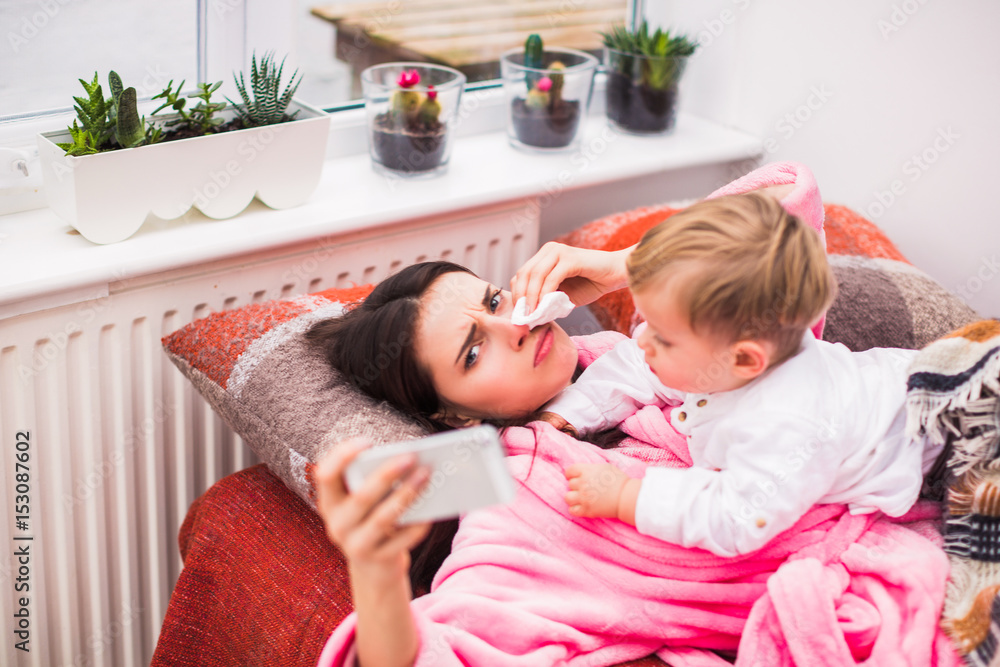
I never really thought about this until I was caring for my sick nearly three-year-old little boy and I inevitably got sick, myself.

Before I became a mother, there was nothing I hated more than getting sick – specifically getting congested. I don’t do well with congestion. I have a deviated septum and whenever I find myself unable to breathe, well, I get anxious.

I’ve been in the most relaxing situations – massage therapy appointments – where the simple tweaking of my lymphatic system would lead to immediate heavy congestion that would not only ruin my appointment, but, the anxiety I would get about not being able to breathe would force me to have to get up, request extra pillows to elevate my head, or leave. Acupuncture appointments were even worse because I’d be stuck, pun intended, with needles in me while dealing with an anxiety attack from treatment induced congestion. At least the congestion would immediately clear up as soon as I’d get off the treatment table.

Luckily, I didn’t get sick all that often. But, when I did it was like a short unintentional vacation in Hell. I love to elaborate on this because it’s really that awful for me. For the first two days of a virus or allergy attack I struggle to breathe out of my nose and out of mouth, and the only way I can catch some relief to breathe is by getting better and getting spotty relief from an over-the-counter decongestant.

Either way, when I lived by myself I learned how to manage my congestion and the hell that came with the anxiety of not being able to breathe. I would sometimes go into survival mode and work through totally sleepless nights of trying to cleanse and open up my clogged sinuses. This often left me feeling like Sisyphus. Luckily, I rarely got sick and mostly suffered through occasional seasonal allergies.

Things took a crazy turn after I had my little boy. We were blessed to have a healthy baby who never got sick during his first two years. But by the time he was nearing three, he had two back-to-back colds in October and then again in November. He wasn’t even in daycare. This was a particularly stressful time because of the pandemic. Both times he got sick, I got sick. And, if I was anxious about getting congested before Covid-19, my anxiety certainly piqued with cold and flu season, pre-flu shot and Covid booster shot.

I had decided to extend nursing during the pandemic so that my little one could benefit from my two Covid-19 vaccines and the follow up booster shot. Antibodies are passed on through breastmilk. The nearness and closeness left mama more vulnerable to whatever viruses he would pick up.

Of course, kiddos in daycare pick up and bring home all kinds of germs. Parents would always say that’s the key to building a child’s healthy immune system. But let’s be clear about something. Catching these colds doesn’t just mean boosting his immune system. It also means taking down mama. I know some dads and other family members might share in the sickness cycle. But, mama is always the target when it comes to sick little ones.

This isn’t a post about why it’s harder to be a mom than it is to be a dad. Someone else can debate that. But there is a difference here. My husband never gets sick. Is it because his immune system is stronger than mine? I already mentioned before having my son I rarely got sick – so dad’s immune system shouldn’t be stronger than mine! We both endured sleep deprivation during the first couple years, but, I continued to have interrupted sleep while I continued nursing. So, aside from differences in sleep hygiene, could it be that I’m in closer proximity to my child and, therefore, I’m more vulnerable to his sneezing and coughing getting me sick? Maybe.

But, I think there’s something else going on.

I don’t have scientific evidence to support this very speculative statement I’m about to make. It just makes sense to me. I believe the process of enduring pregnancy and labor makes a mother more vulnerable in her postpartum existence for years to come. I know this isn’t true for everyone. But, I suspect a lot of mamas would agree. Your body has been through so much. By the time your child is in the virus cycle, probably depending on when daycare or preschool happens, you may have not fully recovered or even healed from the experience. For some women it can take years to fully recover and heal from pregnancy and labor. And it takes years to get passed the exhaustion that comes with growing a baby, delivering and baby and recovering from that delivery. While dealing with the exhaustion that comes from your pregnancy, birthing and healing experience, there’s even more exhaustion coming at you from now taking care of your baby with a sleep deprivation period that just feels impossible to withstand. For many mothers that sleep deprivation continues through the toddler and pre-school phase. There are many reasons for this, depending on what’s going on at home with sleep training, whether or not you’re still nursing, and just how your body is recovering from a long period of interrupted sleep rhythms.

But, I want to back up before the exhaustion part and continue with the postpartum recovery part. While it takes just six weeks for your uterus to shrink back to its normal size, your body had other things to reconcile – like when it moved your organs around to fit your baby. The abdominal muscles and connective tissue have a long way to go to heal completely. I was one of those lucky mothers with abs that never fully recovered resulting in what’s called diastasis recti, which is a condition where there’s a big gap between ab muscles that should have realigned after separating during gestation. It gets even better – around this gap you get a pooch in your belly with fat and excess skin hanging out. Physical therapy can help, and some moms might opt for cosmetic surgery. But there is no cure for this condition. Three years postpartum, I hired a personal trainer to help me build my abs back up, recondition my pelvic floor and try to tighten things as much as possible.

Moms who have had a traumatic birth experience, birth injury, emergency c-section, etc., are likely to have a longer recovery time. I had a c-section after 40 hours of labor, and 4 hours of pushing. Trauma is relative to each mother; I definitely experienced trauma during the c-section. It added an extra heavy load on an already painful recovery experience.

Good nutrition is often more challenging for new moms – not just food choices, but how often you eat and whether you overeat or undereat.

So your body is at work for a long time rebuilding and recovering from so many things. And moms are often bad with self care during the first few years of bringing up baby.

These physiological conditions certainly affect a mother’s ability to ward of viruses that come her way.

As for the start of my child’s cold/flu virus cycle last year, I found myself miserably sick with his first two colds, and then significantly worse with the third cold in November. We took several Covid tests that came out negative. It was just par for the toddler/preschooler course. Not for my husband, though. He was healthy the whole time.

By February last year, my little guy got Covid from the rapidly spreading Omicron variant, and, I of course got it, too. My husband did not.

Since then it has been a long season of viruses and allergies coming in and out of our lives. In November of 2022, we were facing an uptick in Covid cases and new variants, a terrible flu season ahead and the rapidly spreading RSV pathogen sending many children and elderly adults into hospitals. It’s been exhausting. It’s one thing to have to deal with normal cold and flu viruses that are expected to infect your young child every other week. The emerging dangerous viruses that were coursing through our communities were scary. And it is taxing trying to navigate symptoms that are all so similar. It has been stressful wondering if the latest symptoms are the run of the mill colds that little kids must go through, or if it’s one of the more sinister viruses lurking around.

With this very steady, continuous cycle of sickness in our home, I find myself more exhausted. I continue to pick up whatever my child has, and my anxiety is in overdrive from not wanting to get sick and deal with what feels like collapsed breathing over and over again, to real worries about my child’s safety and what’s infecting us each time.

My husband is great. He helps take care of our little guy whenever he’s sick. I get most of the duty when he’s home sick during the workday; I’m an entrepreneur and can put my work on hold most days in a way that my husband cannot. But, when I get sick, there’s not much to be done for me. I’m usually still caring for our little guy and then I suffer through the nights. I cannot sleep when I’m congested. So, I recline on the sofa downstairs, sip on hot herbal tea and honey all through the night, and try to manage my anxiety and read or write. Eventually, I might doze off for a couple hours.

All of this is to pause for a moment and put a spotlight on moms during a challenging time of parenting. I know there are dads and other caregivers who do the same and endure getting sick, as well. But I want to take a moment to acknowledge how difficult it is for moms who find themselves postpartum two or three years and still struggling.

No one tells you about how often you will get sick once you have a baby, and for how many years. No one tells you exactly how long it will likely take to fully recover from pregnancy and childbirth because it’s different for everyone. No one tells you that your body will never be the same, that clothes will never fit you the same (I finally purged all of my stylish clothes pre-baby), or that you will never feel the same in your body. Some of your joints, like your hips, will forever feel stiff or sticky; your abs might never re-align; your pelvic floor might be a broken mess for years to come.

And no one tells you that you’ll be exhausted for so many years. I don’t know any moms of toddlers/preschoolers who are fully rested with excellent sleep hygiene, who really look refreshed.

I look around and I feel connected to these women who are in this same season of motherhood. We dress the same. We have the same look in our tired but bright eyes. There is a fullness that doesn’t go away after having a baby. All the exercise in the world cannot erase that fullness in the face, in the hips and belly.

When you fall ill to the latest virus, you go through a kind of battle because you’re having to armor up and care for your child no matter how you feel. You care for your child with the fierce attention of a mama bear, even when you are about to collapse. And you wonder if your immune system will ever protect you again.

Breastfeeding Beyond Six Months

A CANDID CONVERSATION WITH LACTATION CONSULTANT, KRYSTAL KEY, IBCLC, OF KEY LACTATION IN PORTLAND, OR.
Key Lactation
image borrowed with permission, keylactation.com

This might be the post I am most proud of – because I got to interview my lactation consultant, Krystal Key, IBCLC, who saved my breastfeeding life.  Like many new mothers, breastfeeding did not start off on an easy path for me.  Well, I guess it started off kind of easy – I pre-produced colostrum about two-thirds into my pregnancy and had an abundant milk supply after my son was born.  I recognize that I was very lucky for this because so many mothers struggle with milk supply.

The problems for me came soon after I brought baby home – from painful vasospasms (it was cold in January and my body was still recovering from major surgery, which can keep the body cold, according to Chinese Medicine – thus the nipple stays cold and the tiny ducts can be excruciatingly painful); to thrush (a yeast infection in baby’s mouth and, thus, mama’s nipple, which is also excruciatingly painful and takes a long time to kill off the yeasts that are literally everywhere in our environment – this is a common issue for mamas/babies of C-sections because of the antibiotics); to engorgement  – needless to say it took months before nursing was pain-free.  I swore I was finished with breastfeeding until my doula introduced me to Krystal.

The lactation “consultants” provided by the hospital totally failed me.   Krystal saved my breastfeeding life.  She came to my home and helped me heal from the various issues and pains I was dealing with, and then she helped improve our latch so that we were soon onto smooth sailing.  I haven’t looked back!  Krystal is, to me, a medicine woman healer, a boob shaman, and an invaluable resource for all things regarding breastfeeding health and wellness.

Every woman’s decision to nurse or not to nurse is a personal one.   Most communities lack the kind of expertise and services Key Lactation offers.  I’m lucky to live in progressive Portland for the outstanding women’s healthcare available – and that really extends beyond traditional medicine where a team approach of service providers make for the healthiest experiences, especially for new moms.

While breastfeeding is a personal choice, there’s so much evidence based research supporting healthy breastfeeding practices and the benefits for both baby and mama.  Right now, as we are in the midst of a worrisome pandemic, I nervously researched the safety of breastfeeding.

The La Leche League International offered a helpful resourse for nursing mothers regarding Coronavirus.  It’s amazing to me how breastmilk of an infected mother will naturally produce “specific secretory IgA antibodies and many other critical immune factors in their milk to protect their nursing infants and enhance their infants’ own immune responses… at this time, these immunologic factors will aid their infants’ bodies to respond more effectively to exposure and infection.”

I actually interviewed Krystal several weeks ago, before the coronavirus outbreak.  My questions were geared towards nursing beyond six months – where mothers offer breastmilk not just for nutrition, with solid food becoming increasingly important to supplying your infant’s nutritional needs, but also for comfort and for supporting a healthy immune system.  We didn’t talk in depth about the latter, but I know where Krystal stands regarding breastmilk as medicine (and preventative medicine) for your baby.

Krystal is a fair and balanced lactation consultant and cares for the individual mama without judgement.  There’s no room for judgement with motherhood!  I encourage pregnant or nursing moms to reach out to her at any point of the lactation journey.  She truly is a miracle worker!  Here’s some of her incredible wisdom regarding nursing older babies.


Interview with Krystal Key, IBCLC, Key Lactation, LLC:

Leah: 
You know, many mothers feel guilty for breastfeeding their baby for comfort or as they drift off to sleep. So we’re looking at nursing, not newborns, but nursing beyond six months. And so just nutritional nursing, but now there’s also comfort nursing, other reasons for nursing. So what do you think about that?

Krystal:
For someone worried about going against their natural instincts in that way.
If comforting your child through nursing makes sense to you, I think that it’s a good thing. And part of where we come at it as a society is (A) we’re definitely a society that is uncomfortable with breasts outside of the context of sexuality. So the idea of letting our children to use the breast for comfort. That’s seems Really, really out there to some people. You know, we don’t talk about it as a society, we just don’t see it as normal yet. The other thing is, it is really actually very, very important to get off the bottle by around this age, because of oral development and dental development. And a lot of people don’t understand that the bottle and the breast are two extremely different things where the bottle can be really detrimental for development. As far as like, like the essential stuff, oral development, airway development, the breast is  actually very, very good for those things. Like we often will see or hear about you know, bottle rot, so you know, babies with their first teeth are getting cavities because the milk is going in their mouth as they suck on the bottle. The breast doesn’t do that. And as long as you know, there’s good brushing habits in place, breastfeeding is actually very, very protective against cavities. So It’s actually not a bad thing for babies and toddlers to nurse at night. Yeah, pending that otherwise, you know, the dental hygiene is happening.  There’s a lot of confusion and misinformation around that, and we’re making assumptions as a society as well – we’re not supposed to do this so we probably shouldn’t do that either.

Leah:
First of all, it’s fascinating. I had no idea about the dental aspect of it. But it makes sense.

Krystal:
Even a lot of dentists who really should know better don’t confirm bottle rot is an issue.
So breastfeeding may be an issue out there and when it comes down to it, it’s once again the difference of treating milk as a living substance.

Leah:
So now I’m kind of like wiggling into the sleep training thing.  Because that kind of introduces nursing at nighttime, making that choice to not use a bottle, bottle rot is an issue, among other things. Personally, I found that my baby gets the best sleep when I nurse him to sleep. And, it’s a choice that my husband and I’ve made knowing that the sleep training camp calls it a crutch. So many pediatricians, sleep experts – they discourage that practice claiming babies need to learn to self soothe and not rely on the crutch.  And I’m just curious, as a lactation consultant and expert, what is your advice regarding nursing baby to sleep?  Is it really a crutch when they’re this little?  Will a child eventually learn to self soothe or do you need to do it now? Right away?

Krystal:
Really, you know, everyone eventually learns and develops their own self soothing or coping mechanism. And so, this idea that we need to withhold this form of comfort so that they can develop them.  It’s kind of ridiculous. That’s not really how we work as humans.  And we see it backfire all the time that when we don’t develop healthy coping mechanisms, we end up latching on to unhealthy ones. And I mean, by taking away the breast, but being like, okay, now we’re going to have you sucking on a pacifier or sucking your thumb. We know that messes with the way their jaw and airway develops. So why would nursing to sleep, which is actually a natural palate extender be a bad thing? And I’m thinking about these things as habits, not necessarily good habits or bad habits,  but just habits that we have, certain sleep associations. And if nursing is one of them that works, why on earth are we intentionally telling people they can’t use that, especially when it’s something that really doesn’t have a drawback as far as safety goes. 

But honestly, a little part of me is a little bit snippy about you know, sleep experts saying like, don’t use this thing that works really, really well for you. Because it’s like, well, their business is built around helping you figure out other ways of doing that, so, of course, if they tell you to take away the easiest, most straightforward most, you know, imprinted into our biology. It works in their favor. Yes. Same goes for books that tell us that we’re supposed to do things a certain way, and pediatricians in general and you know, they’re really their birth all the way to 18 years old and so they know a little bit about a lot of stuff, and it totally makes sense, but you know, they may not always be as up to date on different things. And of course, everyone brings their own bias to their profession, you know, we all have our moments where we think things should be done a certain way because you know that power world view has been changed.  And there aren’t a lot of pediatricians out there that would encourage families to continue with bed sharing and nursing at night and things like that. They’re just a little bit harder to find because it goes against our mainstream culture.

Leah:
Well, sleep training often leans on the cry out method to tire baby out and eventually fall asleep. And I’m just curious, how is that a better way for a baby to soothe, then, you know, like you said, having something like breastmilk that you has all kinds of benefits including melatonin.

Krystal:
Yes, melatonin – and oxytocin production helps facilitate the sleep hormone, as well.  Because it’s definitely that brain gut connection.

Leah:
The point is I’m looking at two different chemistries – crying it out there’s been evidence, you know that some people go as extreme in saying there can be brain damage if you just let a baby cry and cry and cry.  I don’t think that’s what most people are doing with crying it out. They’ll go like three minutes. Sometimes we’ll even take the Montessori approach where you stay in the room in a chair and eventually work the chair out of the room.  But there still has been research or findings about the hormones that are involved when a baby cries like that.  I’m just curious.  Is it better to have that kind of chemistry going on in a baby versus the natural soothing-calming chemistry that they get from breastfeeding?  Let’s talk about just the science – chemistry – is it safer to do one versus the other? Or does it not matter? 

Krystal:
The overarching research around crying it out is when crying it out is done in a reasonable same way where it’s not like okay, good night, my child be by yourself and cry for hours – we know that’s not safe.  When people talk about cry it out being dangerous, oftentimes what they’re referring to is a study based on orphans in, I think, Romania (I might be wrong about that), where they didn’t get soothing contact – it was it was eerie. They made no noise and they were very, very complacent that but it is because they had shut down there was no contact. They were just so outnumbered with their caregivers that it just wasn’t possible.  And so when people talk about cry it out being dangerous, that’s the study they’re referring to. And that’s not what happens when people are talking about cry it out. That’s negligence.  That’s borderline abuse.  You know, what we do is cry it out in this society is generally for most people, I want to say and I want to believe that it’s people at the end of their rope. It’s people that have tried to do everything they can and that they’re either at a mental place of total exhaustion where something has to give, or people that are misinformed and think that this was just a milestone of parenting. That crying it out was just something you have to do. And, the reality is, you don’t have to do anything as a parent as long as what you’re doing is safe.   And I definitely over the years met and known, even as a parent, raised kids, that I thought (1), that will nurse to sleep and conk out in like two minutes and then will be anywhere from you know, 2am all the way through the night and then seek out comfort. And then the other one, we had one really, really rough night when she was about six months, where we cried it out that one night just out of desperation. And then she starts sleeping through the night with no crying whatsoever on her own from that point on. And so I do think that there really is kind of a middle ground where there are some kids that are totally fine with that, and there are some kids that it just wouldn’t work no matter what you do. And I think we would see and encounter that all the time when we talk to parents, because there’s always parents that are like, Oh, yeah, we did this and it was the best thing ever. And I’m so glad we did it. And then the parents are like we tried it, and we couldn’t, we couldn’t do it. We couldn’t hang in there. It didn’t work for us. So I don’t think that it’s fair to anyone to say that you either have to do this or you have to do that.  And there’s a judgment side of things.  It’s okay that something works for someone that doesn’t work for someone else.

Leah:
Well, I think what I’m hearing in some ways is that it goes to pretty much everything you learn once you start having children – that every baby is different. So what might work with your first child, the second one could come around and it’s a completely different story. You have to come up with a different tool.

Krystal:
Exactly. Yeah, that’s 100% true. Definitely, especially with sleep, it’s one of those things where sleep is very, very important. We, we just we can’t function as humans without a decent amount of sleep. And I’ve been friends with parents of babies and toddlers as far as development goes, they need sleep. And so whatever it takes to get sleep, and whatever, you know, gets you there with making a relationship feel as good as it is. And, you know, for some families, you know, bed sharing is the dream, you know that that works really, really well. And everyone feels well rested. And everyone is, you know, thriving.

Leah:
That’s a nice segue, because that was a question I was going to ask is that, you know, at what point is it – or can it be problematic to share a bed with a baby while you’re still nursing at night? You know,  are there pros or cons to that? I mean, because we’ve considered that and, you know, we’ve heard against people like, no, at this stage, don’t do it. And I’m like, Yeah, but you know, both of those work, you’re tired and sometimes you just don’t want to be in an uncomfortable chair in the nursery.

Krystal:
Even for a family where both parents are working outside the home – sometimes the most snuggle time you get with your kid is in bed at night.  That’s part of your connection, that’s part of your bond.  And so for families where that works for them, I think it’s absolutely cruel to tell them they’re not supposed to do it.  When it comes to bed sharing, ultimately, it’s about making sure they’re sleeping safely. There definitely are “rules” you know, safety wise, we can’t just blanket statement bed sharing is right for everybody.  But we have decades of research that shows that when bed sharing is being done intentionally and that it is following those rules, it’s a very, very safe option. And so, as far as the timing of it, the older the kid gets the safer and easier its gets.  Bed sharing a little baby, even when you’re doing everything right is little bit nerve wracking but you know, venturing with a toddler, on the one hand, you know, it doesn’t feel dangerous but on the other hand it can be dangerous for the parent – you can get a foot to the face (laugh). We sleep alongside other adults and parents and couples. So why would we deny that for children like, obviously we’re hardwired for safety in numbers and so it makes sense that our small children that are, you know, essentially vulnerable are going to seek out our comfort and seek out our protection at night – and if it works for a family then there’s no reason not to – and every bed sharing family I’ve ever known that, you know, now has older children or adult children – they eventually leave the bed. They eventually sleep in their own space, you know, for it to be a detrimental thing there, has to be some other like, big picture red flag stuff going on. For a typical family, of course bed sharing can be a safe and fun and reasonable option. And it’s one of those things that in the grand scheme of things these years are so short, that you know, if you’re a working parent and the time that you get to spend with your kid involves snuggling them to sleep at night, you’re not going to look back on that and regret it.

Leah:
That’s a good point. I’ve been reading a lot about this and how it relates to mothering, you know, and not just snuggling and nursing when they like roll over and just want it if it’s there.  And I was reading about the Montessori methods – including floor beds in the toddler’s room, and the many reasons to make sure toddlers are able to sleep – whether they are or are not in their parent’s bed.  I also read recently, when I was kind of just googling and researching some stuff, just for fun, that there was an interview, and this is where I’m starting to now look at the anthropology of this, like how have we evolved as a society,  because I tend to feel like our society is just mean to mothers and mean to babies, in general. And so I feel like everything that you think is supposed to be supportive of the family and, in some ways, I feel like we’re being lied to, you know, like I feel like it’s a kind of conspiracy.  I’m a little jaded, and maybe it’s coming out of my own personal experiences, but, there was this interview with an indigenous woman from Guatemala where they not only bed share but they nurse well on into early childhood, whatever age that might be –  maybe four years old, and, obviously the practice is not the same way you would nurse a newborn or young toddler, and I think that’s the thing people think – that you’re just giving your baby the breast all day, that it’s a kind of creepy behavior.

Krystal:
Exactly.  It’s just another area where our society, really, is so far off the mark. You know, a lot of people think that nursing an older baby is like nursing a young baby. When we look at it statistically when it comes to breastfeeding, and here in the U.S. about 80% of parents initiate breastfeeding over all – but here in the Pacific NW that number is closer to 90% where we have a little more support structure set up. But when we look at you know, by the six month mark about half a babies are still being breastfed. By the one year mark only about a third of babies are still being breastfed. So we have a lot of exposure and understanding about what nursing little babies looks like. You know, we all know someone that’s had a baby, but a lot fewer people are nursing older babies. And so our point of reference, of what we know and understand about that is super, super skewed that people just don’t know what nursing a toddler looks like because a lot of people don’t do it. And especially looking at, you know, with a two year old, like by that point most people aren’t nursing in public because you don’t need to, you can tell them that they need to wait until you get home – or, for a lot of people, by the time they’re two years old  they nurse when they wake up and they nurse when they go to bed. Or you nurse just a couple of times a day at intervals or whatever works right for you.  Whereas for newborns, you know, they’re the ones that should be dictating the schedule because they’re the ones that know what they need for growth and development.

Leah:
You kind of just went right to the question I was at when I asked if you find most mothers are reluctant to nurse beyond six months? What are some of the misconceptions about nursing past six months or reasons why they stop and quit? And I think you, you pretty much addressed it with we just don’t see it – well, I’ll let you continue with that. But, people don’t see breastfeeding outside of the home with toddlers so they don’t necessarily know what that looks like.  Are there other misconceptions or reasons that cause mothers you know or work with to stop and quit?

Krystal:
Oh yeah.  Well…as I mentioned – here in the Pacific NW we’re very much a pro breastfeeding bunch.  Somethings that, as a professional, I have heard people say is… I’ve heard of doctors telling families that breastmilk loses its nutritional value after X amount of time. I’ve heard three months, I’ve heard six months, a year, which is ridiculous. It’s like saying broccoli loses its nutritional value after a certain point. It’s food and it’s always, you know, custom made for your child wherever they’re at developmentally.  A lot of people don’t know or don’t realize the difference between the early milk, colostrum, and mature milk – is basically water content. And so, you know, in our society we hear a lot about that baby has got to have that colostrom becasue it’s so good for them and blah, blah, blah. It’s because it’s really concentrated breast milk.  And so as they get older and they start dropping those feedings again, guess what happens to the milk? It gets really, really concentrated again – toddler milk and colostrom have a lot in common nutritionally. And so this idea that, you know, they turn a year and all of the sudden your milk turns to water, or something stupid like that, is so scientifically inaccurate, it’s doing such a disservice to families. I mean, anyone that’s ever been around an 18 month old – they live on goldfish crackers and air. So we have nature’s multivitamin that’s gonna provide the nutrients and it’s gonna provide them antibodies, and help with growth. Why would we not do that?  Why would we not encourage that?  So there’s a lot of misconception coming at us from healthcare providers that don’t understand about human milk – which I mean, generally speaking, most doctors in the entirety of med school, residency, get about two hours of lecture on breastfeeding education – and that’s it.  Even the doctors we would expect to be knowledgeable – like ob’s and pediatricians – the knowledge piece is just really kind of missing.  There are a lot of gaps within our society and then a lot of parents, you know when, when the kid gets older, we find that we hit our stride with breastfeeding but it gets easier. But there’s still issues that come up later. You know, they get teased and sometimes they try to use you as a teething device and that’s not cool – that hurts. And a lot of people don’t know that you don’t have to push through it or just quit. You know, you can help teach them not to do that.  What it comes down to, you know, some kids ask for it like a thousand times a day that can be really annoying. Some people feel like the only thing they can do for that is to ween – and it’s like, no, you don’t, you can establish boundaries and limits and your kids will learn some really good rules about body autonomy by doing that.

Leah:
Well, I think the even the bigger picture of that kind of behavior – of being afraid of your child – so you have to cut something out.  It’s like the child is now in charge, not you. And not that you have to be in charge, it’s not a control thing.  But at the same time, you’re the parent, you’re the one who should be driving the ship.

Krystal:
Always.  It’s your body.  As a nursing parent, it’s your body, it’s your choice.  As long as it is working for you – keep going. And if it’s not working for you, you can make shifts, you can make changes. You can put in limits, you can put in boundaries – and not only is that going to be really beneficial for your kid because it’s gonna help preserve your breastfeeding relationship – it will be beneficial for your kids because it’s one of the earliest lessons in consent and about body autonomy and all the things that our society is really pushing for in the last decade or so.

Leah:
Okay, so, we kind of already talked about this, but do you think breastfeeding beyond six months is supported enough in our society? You know, we’ve talked about the challenge and some of the cultural professional, you know, their moms like who we have more families where both parents are working and some pump and, you know, one of those parents that I decided not to pump. But I had the flexibility to do that. And I understand that that’s not the case for everybody.

Krystal:
On the one hand, I don’t want to say, yes, I think that there is enough support for it. I think there’s a really, really big push for it.  But I think that the push without the support of how to actually make it sustainable. I think that’s one area that our society really, really falls short. Because, for a lot of people, even if they are back at work, and they’re pumping further and further out, and so a lot of people find that, you know, they feel like they’re losing their milk supply when they get around eight, nine months.  I mean, even when you’re not pumping, you’re just exclusively nursing, a lot of people find that they struggle with that, too, because you’re seeing nursing an older baby is different than nursing a little baby. So, oftentimes, you know, by the time we hit that three month mark, a lot of people are saying, they’re nursing every three hours, eight times a day and the stuff that you do, you nurse where you let the baby decide. But for a lot of babies when we get closer to the six month mark and you introduce solid foods that can interfere with if we don’t know that we should be nursing before and after we’ve had solid food.  And, so if we’re not nursing frequently enough, there is a diminish in milk supply, and then around six months to a year, kids will start to stop night feeding because they’re sleeping through the night, and that can have a negative impact on milk supply also because when they drop those night time feedings, they need to make up the difference in nursing during the day. And so a lot of families really actually need to have more of a parent nursing relationship – offering the breast every two to three hours depending on if the baby is sleeping through the night or not. And because so many people don’t know that, they’ll accidentally be nursing like six times a day, when they’re nine months, and then all of a sudden people are going I lost my milk and I don’t know what happened. And it’s like, we just don’t know what the normal system looks like – and that’s not the parents fault.  It’s a symptom of our society.  We don’t see it enough, we don’t know what it looks like.

Leah:
It’s interesting.  I’m about to make a blanket statement here.  I mean, it seems like as a society, and in some cases, maybe it’s the  parents, and depending on their schedule, knowing every family dynamic is different, but, it seems like, culturally,  we do want our babies to conform to our needs versus, you know, maybe sucking it up for two plus years, hunkering down and committing to making the baby’s needs the priority, not the other way around. 

And again, that’s not intended to be a judgment statement, but looking at this  issue from an anthropological examination or observation, it seems like, culturally, so many things, whether it’s nursing, sleep training, etc., so many choices are directed toward our desire to have our babies immediately conform to our lifestyle versus recognizing we brought in this new human into the world, into our home and their needs are going to trump our needs, we have to adjust ourselves to the baby.  And again, not a judgment I feel this just happens a lot in American, perhaps even Western society, because some of the things I’m reading – I’m reading a lot of mommy blogs that are not necessarily based on science or facts – but just opinions and thoughts. A lot of what I’m reading is about how new moms are just trying to get baby on track. And I’m seeing that a lot and it’s making me pause because I didn’t think about any of this before.  And I did study a lot of anthropology so I’m wondering about our intentions as new parents.  What do you think, as a professional? Do you kind of see that happening with our society and, if so, are there ways to kind of help retrain the parenting roles, to not hurry baby to conform to our immediate needs? 

Krystal:
I don’t see that as an individual failure.  I think we have a really interesting paradox being given or bombarded with “you have to put baby first” while also being bombarded with “you have to take care of yourself.”  And I think that’s really where we kind of see this kind of coming to a head. You’re damned if you do, and you’re damned if you don’t.  There’s a lot of competition with the older the baby gets. Especially if you’re back at work or if you have other commitments.  And even if you have the luxury – even though it’s not really a luxury to be a stay-at-home parent, but we get bombarded with this message that we’re not good enough, that we’re not putting our kids first, etc. But then we’re like, simultaneously drowning as we’re trying to do that. Constantly trying to put baby first, is the other extreme where you then need to put yourself first or else your snap.  I don’t see that as an individual failure, it’s a societal thing.

Leah:
I was gonna ask you if that might have to do with support systems, too, I mean, I think a lot of families are not necessarily staying in the same core place where their parents are, or their siblings, etc.  Families used to live within a block, you know.

Krystal:
It takes a village.  It’s so true.  You know, if you’re two adults and one kid, you’re still outnumbered (laugh).  It got hard because as a society we don’t take care of families enough.  You have the choice of either give up  income and really struggle, or go back to work when you’re probably not physically ready for that, but also emotionally. The thing that’s really sad about that, and it really, really makes me angry, especially as a working parent, is the idea that you have to sacrifice getting to see the first time they rollover or seeing the first time that they crawl, or the first time they walk, the first time they say words.  As a working parent  you have to say to the nanny or daycare provider – when they do this don’t tell me because I want to believe that I got to see the first time.  It’s incredibly sad and it sucks for us as parents.  And on the one hand, having lots of different care givers can be really, really beneficial for children. But we should do that out of choice not out of necessity.  And so for families and just the structure that we have, we just did this because the support just isn’t there, it’s really sad because, you know, like, you mentioned, you’re looking at, other countries, and we have to ask ourselves questions like why don’t we have paid leave like every other country?  In Europe, for instance.  In Scandinavian countries their rates are really really high compared to ours. At the same time, when we look at the UK’s rates, they’re not as high as you would expect. They’re pretty close to ours in a lot of ways.  And so it’s like, what are we seeing in the bigger picture? What is going on culturally? What is going on with our society?  It’s not just about having the support piece but how do we make it through the first two years?  It’s also how do we support this, how do we use it? How do we value this? It makes a really big difference, because even though someone wants to breastfeed, if they don’t have access to knowledgeable providers, if they don’t have support from their families and their friends, if they don’t have support from their healthcare provider, it’s hard.  And that’s a really, really common thing that we face in the US.  Most pediatricians say they encourage breastfeeding – when breastfeeding is going well, they’re all for it; but as soon as we see it’s not where it should be, they don’t work with lactation consultants – they’re like “here’s your can of formula.”  Which, if someone wants to formula feed that is more than okay, that is absolutely someone’s choice. And every person has the right to treat or feed their body.  But if someone wants to breastfeed, that’s a huge blow. Like that’s really, really not fair to them. And especially because we put doctors on pedestals in our country – it really sucks because if no one’s telling those parents that there are lactation consultants – and some are better than others.  Then it’s the family that suffers.

Leah:
We’ve talked about some of the benefits – the obvious benefits – of nursing a baby beyond six months.  Let’s talk about mom.  I mean, we know that when you nurse a newborn, there’s a host of benefits to the mother, like, maintaining a healthy weight, producing oxytocin, you get the same exchange.  For me, it started out a little tricky, as you remember.  It took me a while to find my breastfeeding zen – it wasn’t all roses for me at first.  But once we got through the many challenges, and once breastfeeding became easy for me, I have to say, it’s the closest thing that I’ve experienced to meditation where I’m just completely present. My thoughts don’t go anywhere. I don’t know how or why it happens like that. But I literally don’t think about anything I’m just snuggled in and I’m completely present. And that to me is like that’s why I don’t want to give up nursing quite yet – selfishly! What can you say to that? What are the benefits to a mom once past six months of nursing?

Krystal:
Oh, absolutely. I mean, besides the obvious of having those moments where you get to really be more checked in in with your little one, there are so many health benefits to what people refer to as “extended nursing”.  With breastfeeding, basically the way it shakes out is it’s using your body the way it was designed to be used, and it has a positive impact on all of the “big bads” – when it comes to heart disease, diabetes, reproductive cancers. All of that. There are study after study after study that show that the longer a person breastfeeds in their life time, even if it’s not back to back, even if it’s broken up over a number of years between different children, the better the impact on overall health, the better we see with outcomes around, you know, all the scary health things we worry about and we try to keep in check as we get older. And so when it comes down to the fact that we don’t talk about the benefits for the mother as much as we talk about the benefits for baby,  in my opinion, I think they’re equal. Yeah, you know, all the things that nursing does for a baby or a child, we often see the benefit for a parent.  It really boils down to, you know, epigenetics, and, you know, altering or happening the way that it does – it makes a huge difference on how our bodies are able to function and able to do things. And it’s more of a thing that right now, even though we’re finally starting to study it, we’re not nearly where we should be in understanding and how and why. And I am really actually really, really excited about and hopeful for, by the time my kids are old enough to be having kids, what we’ll will know and understand and hopefully, the changes and the benefits that will be around all of that.

Leah:
I don’t want to get like woo-woo-out-there, but I really do feel some kind of sort of metaphysical, like, mind-body-spirit connection that’s going on that’s beyond just the biological. Do you know what I mean?  I’ve experienced it. I don’t know. It can feel very sacred. I mean,  I had no idea that would be the kind of experience I could have coming out of really difficult first few months.

Krystal:
A lot of people have that experience.  The thing where I mean, to be totally honest and totally fair, it’s not like that for everybody.  Some people don’t enjoy breastfeeding and they do it because they know the health benefits, and they do it because they’re choosing to which is really huge sacrifice. It’s the one thing to breastfeed because it works for you and you like it. It’s another thing when breastfeeding can be hard.  That’s beyond.  That’s like merit badge or gold star parenting.

Leah:
I’ve been on both sides of that because I almost gave up.  I mean, I really did. I was really set after a few months like it was so hard with the cold and the vasospasms and then thrush and, and one issue after the other. I was like, screw that – this is too painful. And I just didn’t expect there to be so much pain involved. You know, I had enough pain going through labor and recovery. I didn’t expect there to be more constant pain in this and it was emotionally draining for me. But once we got over that hill, and it really hasn’t been until like now like I’m talking like the past month and a half two months where I’m having this experience where it reminds me again I’m not trying to get woo-woo but like you know we know about the chakra system but I get the same sort of sensations like when I get acupuncture – I don’t know what it is and/or why, so I don’t have the understanding to name what I’m what I’m experiencing, but I’m experiencing something and the closest thing I can say it comes to is the mind-body-spirit connection I get when I’m getting acupuncture.

Krystal:
Yeah. And I one hundred percent agree – as for myself – between my two kids, I think I’ve nursed probably eight years or beyond. When it comes down to it, like especially as they get older,  it’s really interesting because there are times when it’s like, man, I can’t wait to be done. Like, y’all, you need to wait five more minutes, I have to go do this thing. Especially with an older baby. There’s a moment where that connection and you just try – it’s almost like a meditative state – where things will slow down and it’s that reminder it’s that checking in with the universe of like, okay, this moment is fading and we’re not gonna have this back.  Even though you’re so so big, you’re still so little.  And it’s just, it’s a peace moment and this has been going on physically and because so many people do experience that – and yet sometimes nursing a toddler is really, really annoying.  There’s got to be some kind of biological pay off to keep us going with that. 

Even if you have a toddler that is all about nursing, if it wasn’t at least somewhat of a positive experience, you know people would not keep going. And, from an anthropological point of view when we look at ourselves as mammals and we take out, you know, society and culture, what we think about nursing, and we know that as a species, we are designed to nurse each child for upwards of two to three years – it’s pretty average worldwide. And even in some cultures, upwards of seven years.  So I mean, we’re kind of the weirdos in the U.S. for weening our babies as early as we do.

Leah:
That article that I read about the Guatemalan woman from the indigenous tribe – not only were they talking about just how long they breastfeed, but in this interview with a couple of Guatemalan women, the interviewers were explaining to them that here, in the U.S., most parents will put their baby in a nursery in a crib by themselves.  Sometimes they cry it out – they explained the ways American parents get their babies to go to sleep. And these indigenous women look horrified. They’re like, wow, these poor babies! They were so horrified and scared for these babies. And when I read that piece in the article, I thought it was just very interesting because I came into being a parent with no judgment and no idea what I was doing.  I mean, I have great parents, and you kind of learn from them. But once it’s yours, o
nce you have a child, it’s a whole new world, and you’re learning as you go.

So I read that, and again, this is pulling me back to when I studied anthropology some 20 years ago, it’s really making me look hard at my choices. Now, again, this isn’t about judgment. It’s just being maybe more aware of what we are doing.  What are we putting out in the world versus other places that we think are “third world countries” that are, in many ways, way more civilized than we are!

Krystal:
I totally see and identify with that, you know, how does the way we raise our people, how do we interact with our children, how does that impact all of the bigger picture and downfalls of our society? You know, how is all of that connected – because it’s got to be. How would it not be, the way that we fundamentally raise and treat and teach our children to interact with others by the way that we model after them, by the way we interact with them. It’s really, really fascinating and you can be the most attachment oriented parent in the universe, and this is a moment where you lose it and you yell at your kid – and having to kind of find we’re what we want versus our reality – it’s hard.  It’s hard to rectify that sometimes.  We carry a lot of guilt in our society, and even the fact that, you know, throughout the conversation. Yeah, we’re both acknowledging and saying so many times that you know, “I don’t mean this with the judgment, I don’t mean, you know, I’m not trying to shame anyone” – the fact that we all kind of carry that around, that we all are still hyper vigilant about is someone judging me and am I being judgy?  In addition to teaching classes and working with families one on one, I have been facilitating the parent support group for five years. I know I can’t think of a single time I have ever encountered a parent that was full on like, out there like judging another parent in the room. And I mean, I’m a young, no-holds-bar, and definitely, nothing’s off the table kind of person – and we talked about everything.  So there were lots and lots of opportunities for judgments to come into play in those scenarios. And we’re also all just doing the best we can with what we’ve got. And we all want to do right by our kids. And so the fact that as a society we’re so hyper vigilant and aware and careful at not stepping on each other’s toes – that’s a whole other can of worms about how we view parenthood, about how we view child rearing.

Leah:
You brought something up that I don’t think I wrote it down as a question, but I think it is a good question in certainly the context of all this. So what about now you have one child, now you’re going on to potentially having a second baby. So there’s all kinds of you know, lots of questions about nursing.  Can you still nurse baby one while you’re getting pregnant – like my doctor told me because of my age – “Oh, if you’re trying to get pregnant now you need to wean him off immediately or else you’re gonna have a miscarriage”.  I kept wondering – are you just telling me this because of textbook studies or, like, is this really gonna happen?

Krystal:
One of my favorite, in the most sarcastic, irritated kind of ways, examples of the misinformation that doctors inadvertently, I want to believe, are spreading around breastfeeding – you’ll be six weeks out from birth and they’ll be like – you have to get on birth control or you’re gonna get pregnant even if you’re breastfeeding.  And, yet, you know, when you’re six months out and you’re talking about, well, I think we might want to have another baby now rather than later, and then it’s like all of the sudden you’re not gonna be able to get pregnant if you’re still nursing.  And that’s just not how the body works.

Basically, the way breastfeeding works,  as far as birth control goes, is about – if you are exclusively nursing, meaning no bottles and no pacifiers, and if you are nursing throughout the night and throughout the day you’re not separated from your child basically ever, then in that case, unless your child is under six months or they’re not getting table food, then you’re pretty darn protected against pregnancy – your body knows that you have a young child that’s dependent on you so it’s not trying to make another child.  But as soon as they introduce any of those components, fertility can return.  A lot of people absolutely get pregnant while they’re nursing.  We see in here you know all the time. “Oh, well, my Aunt Kathy’s cousin’s best friend got pregnant while nursing.” Because everybody is different, different people are going to experience that fertility threshold coming back at different points. And so that’s not to say that yes, you need to ween in order to get pregnant. Or because, you know, because nursing releases oxytocin for someone that is, you know, susceptible to miscarriage. Sometimes it is necessary to ween when you’re pregnant. You know, it’s not a hard and fast everyone must do it this way.  There’s so many people that nurse throughout pregnancy and go on to tandem feed those kids for years.

Leah:
What does that look like to a family that, let’s say they have one child, now a year old, and they’re actively trying to get pregnant, then they find out they’re pregnant (super excited!).  How does that change how the mom breastfeeds? Does that change breastfeeding? I mean, I know there’s no one answer. There’s probably different dynamics to that.

Krystal:
Oh, pending on the healthy mom, healthy pregnancy, for most people milk supply is going to drastically drop off once the placenta is fully formed and starts creating hormones.  I recommend if you’re intentionally trying to get pregnant wait until your kid is pretty darn close to a year in case you do lose your milk supply, nutritionally speaking you want to make sure that you’re first kid is going to be all right. And then, once those ducks are in a row, then take it one day at a time because one of the first signs of pregnancy is breast tenderness and so a lot of people that in that state of pregnancy just change their minds.  You have the intention of doing one thing, but, in the reality of it, you may decide to do something else.  And so, be flexible, be open.  And if nursing through the pregnancy works, great, and if it doesn’t, that’s okay, too.  And a lot of kids will ween during pregnancy because the hormones change the way the milk tastes and the supply reduces.  And when it’s a child-led weening experience, it’s usually lot more pleasant for the family, overall. So, if that’s how it shakes out, there’s nothing wrong with that. That’s totally fine.  If you’re nursing through pregnancy and working, a lot of people, when colostrum comes in at around 16 to 20 weeks, nursing gets markedly improved.  So it’s one of those things where it’s like, once again, not knowing what normal looks like, it messes with us!  If you’re nursing a 10 month old and you’re pregnant, and it’s miserable, and you don’t know that it’s gonna get better again, then why would you stick with it?

Leah:
So, when you are pregnant, and let’s say you are nursing, occasionally, said child, you still produce colostrum right before the second one is born, right?

Krystal:
Yes.  Most people start producing colostrum about halfway through the pregnancy – and toddler and older babies can absolutely eat that.  Colostrum does have a laxative property to it.  So, parents deserve to have that on their radar – if it feels like your toddler has diarrhea when your classroom is coming in, it’s not that they’re sick, it’s that their body’s adjusting to the superfood your body is making.  In the long run, colostrum has a lot of benefits as far as antibodies and nutrition goes.  It’s definitely not harmful and then once milk comes in, there’s a biological feedback that happens between the breast and the baby’s saliva. And so even if you’re nursing two kids at once, you’re milk is still going to have a personalized special recipe, that perfect mix for each kid.  Your body is freaking amazing!  You know, when, as a society or as a culture when we think that it loses nutritional value or that formula is just as good – that’s not how the human body works.  We are mammals.  We are literally made for our ability to feed our children with our bodies.  So why on earth would anyone question that or think that it’s not amazing?


I want to thank Krystal Key for taking the time to chat with me!  For more information about lactation services in the greater Portland area, and beyond, please visit Krystal Lactation, LLC.

This interview was recorded using otter.ai recording app and services.  Teleconference recording is not a perfect art, so, the editing of this interview was done listening to a rough cut.  

Leah Jorgensen does not endorse a “breast-is-best” for everyone philosophy and recognizes the many nuances of motherhood.  We all do our best to make the best choices for ourselves and for our dear families.  Leah is a client of Krystal Key and joyfully shares her experiences and wholeheartedly endorses Key Lactation, LLC.