FIVE Postpartum Things I Learned From My Personal Trainer

woman chats with her personal trainer online

My postpartum journey has been going on for four years now. I struggled in my new body to rediscover what kind of exercise and movement was best for me. Prior to my pregnancy I had been an avid runner and gym-goer. But those former workouts were no longer working out for me.

I walked outside a bit and kept most of the weight off from nursing. But once the weening process began, with another round of hormonal havoc, along with low activity during the pandemic, I had packed on some pounds. Worse, I didn’t feel strong in my body. I felt broken. My postpartum injuries and pain were fully felt.

In the summer of my child’s second year I was visiting family and my cousin asked me if I wanted to join her for a thirty-minute workout with her personal trainer. It was a rewarding workout on her wrap-around porch and it made an impression on me. I wanted the convenience, ease, expertise and personal attention of a personal trainer, too!

I had looked for months, to no avail. I specifically wanted to find a female personal trainer out in wine country who would come to my house. Eventually I was able to manifest what I put out for the universe to work into place for me. I was on LinkedIn looking up something business related when I found Katie. I was looking for a personal assistant, at the time, but, for some reason (a-hem – the universe working its magic!) a personal trainer also came up in my search. Curious, I messaged Katie and she got right back to me. I quickly learned that while she lived in Oregon, too, we would workout virtually – which was even better for me! Further, I could actually afford the transaction.

Three and a half years after giving birth I started my first session with Katie. And it has been a life changing, mutually beneficial relationship. We have become friends and allies. Katie continues to help me on this journey of reclaiming my body, my strength, my balance, my endurance and my confidence. Along the way, she made some profound observations regarding my postpartum health and wellness, specifically with my hip pain, diastasis recti, and pelvic floor weakness – things completely ignored by my postpartum and family medicine healthcare providers. She helped me to finally recover and thrive.

Here are five amazing things I learned from my personal trainer that helped me to finally enjoy a full recovery from postpartum injury and trauma.


BRACE YOURSELF!
Brace your core, that is. My trainer advised that I not only brace my core when engaged in our workouts, but, to use this practice through out my day – walking up and down the stairs, doing laundry, washing the dishes, making dinner, in the shower, in the care, in line at the grocery store – anytime. For those new to this concept, bracing your core is mostly associated with the practice of contracting the muscles around the spine to created a tight midsection often engaged when bending your knees to lift something heavy. This prevents back injury. But bracing your core is also a great engagement during your workouts to build the abdominal muscles while in yoga positions or other functional training. This creates stability around your spine. After growing a baby, your core gets moved around and your abdominal muscles relax. Part of the recovery from childbirth is your organs and muscles eventually fall back into place. But this doesn’t always happen perfectly. Strengthening the core should be a part of every postpartum woman’s eventual workout regimen (when cleared by healthcare provider). Bracing the core supplements all core training and really supports all of the spots a postpartum woman needs to focus on – including pelvic floor and diaphragm.


RE-LEARN HOW TO BREATHE!
When you are in your third term of pregnancy your breathing changes. Your baby is taking up more real estate, your diaphragm and lungs are not in the same space for deep, whole core breathing. Your body naturally adapts – and the crazy part? You don’t even realize your breathing has changed to compensate for your baby’s growth. The way you breathe starts higher up, and you often lift your shoulders up to pull in a “deep” inhale. Your exhale is short. Women tend to carry on breathing this way long after baby has been born. One day, I mentioned to my personal trainer that I often felt discomfort whenever I had to do forward bends. Not pain. Just a weird feeling as I folded over the top of my belly under my breasts. It was my postpartum bump that never fully went away. She paused for a moment and told me she believed it had to do with how I was breathing. She said it was my diaphragm that was causing the discomfort. And then I learned about diaphragmatic breathing. This became a deeply emotional recovery because I carried on breathing the wrong way for over four years. I was breathing wrong during horrible head colds and even when I was sick from Covid-19. I often felt like I was suffocating whenever I was congested and sick. Diaphragmatic breathing was so foreign to my body that I had to totally re-learn how to breathe in expanding my tummy like a balloon, a movement that engages your entire core and pelvic muscles. The exhale is long, slow and works its way all the way back up your core. It’s an exercise in itself! I wrote about the importance of diaphragmatic breathing and how it’s the most important practice for postpartum healing – which you can read all about here.


TUNE INTO THE MOON!
You don’t have to follow astrology or understand it completely to receive the benefits of what the universe is energetically delivering for us. I happen to have a personal trainer who is deeply engaged in astrology and I am very interested in metaphysics and certainly the greater impacts around us that can work for us – and sometimes against us. But, my trainer taught me that customizing our workouts to the rhythms of the universe – especially lunar cycles – can really have an impact on outcome. Full moon? New moon? She can create a bespoke workout to address my needs. She knows my birth chart and considers sweeping cosmic changes that are going on for me when she considers what type of workout would be best. I may need more of a restful workout with deep stretching. Or, I may need to get my heart rate going and double down on strength training. I can feel a difference when my workouts are in synch with greater energies of the cosmos versus when I would throw down a workout that poorly coincided with astrological activity – symptoms of feeling drained, over-tired, challenged with recovery, or not feeling like I got enough from my workout – all of these things have happened when I wasn’t working out with metaphysical rhythms. It’s amazing and not so surprising, if you think about it. There is a certain grace that can be experienced when one is in tune with the shifting energies around us. I also consider my water intake during and following workouts in response to the lunar cycle. We know how deep the water/moon connection is – and what this means for flushing out our kidneys, etc. Traditional Chinese Medicine holds an ancient, deep philosophical and medical understanding of the connection of astrology and physical well being that fully supports this practice.


LESS IS MORE!
Many women fall victim to the assumption and pressure that they must rid themselves of the baby bump and baby weight as soon as possible. There’s shame around the changed body of a new mother and baby weight is often regarded as fat. This is horrible on so many levels. Healing is often disregarded in exchange for body dysmorphia. Postpartum hormones can dangerously play into the negative self talk. Body acceptance is so critically important. And beyond that acceptance, a newfound appreciation, awe, and gratitude for creating and growing another human being are necessary for self love. I’m so relieved that I never cared about the aftermath of my postpartum body. I mean, I was deep in the process of needing to heal. There was no time or energy to worry about how I looked. Instead of trying to implement the over the top workouts that were part of my pre-pregnancy routine – running, working out at the gym and regular yoga classes – I let go of the virtues of hard core. I look at movement differently – how I get it, where and when I get it. Instead of hitting the pavement or treadmill hard, opt for long walks outside or nature hikes to get in some forest bathing. I make it a priority to engage in movement that I enjoy. Part of my movement routine includes two thirty-minute workout sessions a week with my personal trainer and we mostly cover functional strength training aiming to heal and strengthen my core, pelvic floor and hips. We get a lot in during those sessions, with exercises that typically are two-for-one, meaning they engage core and get my heart rate going or they stretch my hips while adding a little strength training for my arms, and so on. I’m getting the most holistic workouts and I’m not putting in the same frenetic energy as I once did, and I’m still getting great results!


HIPS DON’T LIE!
Hips are getting a lot of attention in the fitness and physical therapy world. It’s not just pregnant and postpartum mamas needing extra care there. There’s all kinds of information out there about the somatic relationship of pain, trauma and our emotions being stored in our hips. Which means our hips are also a great wellspring for offering deep, emotional healing. In my case, I experienced birth trauma and a hip injury during labor. In addition to the normal pressure pregnancy puts on our hips, I was carrying the weight of a lot more trauma and emotional stress that got stored into my hips. The good news is yoga instructors and certain personal trainers can gently address the hip pain and somatic tension, pressure and blockage. My personal trainer has been a champion in the area of healing for me. We have worked on various stretches that have put me in poses that immediately released pain – not just physically but emotionally. I would often get tears in my eyes for no reason while holding certain positions that opened up my hip joints. Whether engaged in dead bug, airplanes, hula hoop circles – my trainer has an endless list of moves that strengthen, stretch and relieve the hips. It’s been incredibly therapeutic. Plus, when I brace my core and practice diaphragmatic breathing while holding these hip positions it’s like the heavens have opened up and filled me up with the most intense, beautifully healing and strengthening light and energy offering deep healing through and through.

The important thing to point out here is that I would not have come to many of these conclusions on my own. I didn’t know what I needed – even though I’m a former athlete and coach. Postpartum recovery isn’t always intuitive and in most cases we don’t know what we don’t know! I highly recommend finding a personal trainer or yoga class that expertly works with postpartum women to recover, heal and find new strength in a new and glorious body.

Winter Has Come

49418262_2351443598228701_252584776114896896_n

I took a hiatus from this blog.  Once I got into the thick of Harvest 2018, while in the second trimester of my first pregnancy, I lost the ability to think outside of the demands of bringing in grapes, processing grapes, fermenting grapes, pressing grapes and putting nascent wine into barrel for winter hibernation.

Winter is my season.  I was born in the midst of an ice storm in Havre de Grace, Maryland in the month of January, after all.  I love snow and staying home to stay warm.  But, this year, as harvest wrapped up and the holidays came along, I felt a sense of melancholy.  This was the first time I had missed spending Christmas with my family – ever.  It’s bad enough that I don’t get to see my family enough.  Missing our family traditions made me feel alienated in our quiet, little farm abode in Newberg, Oregon.  I missed my family.  I missed the Christmas traditions that I looked forward to sharing with my family:  driving through the neighborhood to look at the Christmas lights; the Italian tradition of the feast of the seven fishes on Christmas Eve; Midnight Mass; Danish smørrebrød on Christmas morning; watching my young niece and nephew enjoy the magic and wonder of Christmas morning; enjoying the cozy togetherness, the simple art of hygge (the Danish art of coziness); and going out for the annual holiday movie with my siblings (specifically the blockbuster sequel genres of Harry Potter, The Lord of the Rings and Star Wars).

I had to miss going home for the holidays because I was 36 weeks pregnant and unable travel across country by airplane.  And while many friends in my social media circles tried to console me and remind me that I have my own home now and my own family – a doting husband and a baby on the way – I couldn’t shake my winter blues.

While there’s nothing like going home for Christmas, it turns out that my many friends in my social media circles were right.  Traditions can be edited, families grow, and life goes on.  My sweet husband worked hard to ensure my winter – and the holidays – were still warm and cozy.  They were different, but no less special.  We had Christmas Eve dinner with his father, aunt and cousins; we attended Midnight Mass at the beautiful Grotto in Portland; he made us a beautiful Danish smørrebrød on Christmas morning; we quietly opened up gifts that were all for our soon-to-arrive baby; and, on New Year’s Eve we had a magical dinner in and set off crackers that sent brightly colored streamers to adorn our Christmas tree while sipping on Champagne, and then we slow danced to Auld Lang Syne.  It was all perfect.

I got my wonderful winter.  My birthday came along and my husband made a perfect Coq au Vin which we paired with a special bottle of 2011 Clos Roche Blanche Cuvée Pif.  This wine is significant for several reasons.  For one, I made my first wine for my business in the same vintage – 2011.  Clos Roche Blanche was the inspiration for the first red wine I ever made – my Oregon “Tour Rain” Vin Rouge – which is 40% Gamay Noir and 60% Cabernet Franc.  The 2011 CRB was born to go with my husband’s Coq au Vin.  It was nice to finally sip on some wine without repulsion during this pregnancy.  It was like falling in love with wine all over again!

As these annual markers and milestones passed, we were closer to delivering our baby.  On the weekend of our 38th week gestation we decided to take a last minute “babymoon”.  I got the green light from my doctor and we packed up for a much needed respite up on Mt. Hood.  We arrived at our friend’s quaint cabin in the snowy village of Government Camp.  We enjoyed precious time together – just the two of us before becoming three – cooking lovely meals, my husband building the best woodstove fires, playing rounds of gin rummy, snuggling, taking easy walks in the snow, and then snowshoeing a moderate trail for two miles on our last day on the mountain.  I was proud of myself for snowshoeing at 38 weeks pregnant!  It felt wonderful – my joints opened up, the fresh air was like medicine, and the snowfall was a welcome peace.  Our babymoon was winter jubilation.

The following week, I began early labor at home.  Winter had come.

After two days of early labor at home, we checked into the hospital for a light induction.  More than 24 hours later, after active labor followed by 3 hours of pushing, and a baby not passing through the pelvic bone, we were carted into surgery for a C-section.  Our beautiful baby boy was born on January 15th.

For a winemaker, this is the perfect time to have a baby.  The barrels were getting topped, as needed.  And plans for bottling the white wines in March have already been made with minimal work to do beforehand.  My husband was able to take off four weeks from work so that we could create our little fourth trimester cocoon.  We have been cozy at home, our Christmas tree still up (and quite a hit for our newborn’s gazing delight), sleeping, napping, breastfeeding, and eating nourishing, comforting winter foods – rich yellow lentil soup, beef chili, lasagna, baked sweet potatoes, southwest hash browns with farm eggs – our refrigerator and freezer prepped before heading to the hospital.  And, many of our friends in the wine business helped us out with a meal train – bringing restaurant quality foods and groceries to our front door.

We aren’t leaving the house and we aren’t opening up the door for visitors.  We are using this time to nurture and protect our newborn, allowing me to heal from both pushing in active labor and a c-section, and using this time for family bonding.  We are also in the midst of a measles outbreak in the greater Portland / Southwest Washington area – which is causing a bit of panic for many of us with babies under a year old who cannot get vaccinated.  It’s crazy, but suddenly it feels more like 1819 than 2019 with mostly anti vaxxers’ children under the age of 10 getting sick, but, putting babies and immune compromised people in danger.

Sign of the times, I guess.  The world seems crazy!  It is why I take even more comfort in staying home with my husband and baby for a winter hibernation.  It is quiet, healthy and perfect.  I am activated to write more in the few precious moments when I can sit down while the baby is sleeping, sip on some hot tea, and give my patient, sweet cat some attention.  I have a lot on my mind right now – mostly about parenting and processing a traumatic birth and dealing with the physical discomforts that come with healing from childbirth.  So, the blog will reflect what’s going on in my mind.  Eventually, it will turn back to winemaking thoughts and nutrition and living on our sweet farmstead in Oregon wine country.  There’s plenty of time for those things.  We are very much in the moment now, and that reflects mid winter, some solitude and the earliest days of caring for a newborn – with all of its beauty and wonder.  Yes, I got my wonderful winter.


Top Ten Essentials for How I Survived At-Home Lock Down When Pregnant

Smokey Sunset over Mount Scott in Happy Valley Oregon

There are many reasons why a pregnant woman may be stranded at home in lock down mode.  For me, it has been the unhealthy air quality in and around Portland.  Wildfires in Washington and British Columbia have dumped smoke into the region, making Portland one of the worst cities in the world for air pollution.  It’s been three days of this.

Here are the essentials I’ve relied on to prevent myself from going stir-crazy.

10.  Housework.  My least favorite thing to do.  But, when I’m home, there’s always something that needs to get cleaned or organized.  I’ve been up to my elbows washing dishes, doing laundry, tidying up the bathroom, changing the sheets in the bedroom, etc.  You won’t find me cleaning the litter box ( a no-no when you’re pregnant).  I’m also not vacuuming because I just read an article yesterday about avoiding this chore while particulate matter is polluting the air (from wildfires).  I am also going through my stuff, making piles and purging things I don’t need anymore in preparation for our upcoming move.

9.  Hulu, Netflix and Amazon Prime.  What can I say?  I like a good movie or a binge-worthy series to pass the time.  The latest binging has been on HBO’s “Sharp Objects” and “Succession“.

8   Pinterest.  Getting ideas for the nursery.  There are too many cute ideas out there! I love the inspiration I get when setting up my boards.  Dreaming up the space for our little arrival makes things feel real.

7.  Caviar.  Not fish eggs.  The restaurant delivery service.  I’d put grocery delivery here, as well.  But, there’s something sweetly indulgent about having really great restaurant food available for delivery.

6.  Books.  “Nurture: A Modern Guide to Pregnancy, Birth & Early Motherhood” by Erica Chidi Cohen; “Bringing Up Bebe: One American Mother Discovers the Wisdom of French Parenting” by Pamela Druckerman; and “Being Boss: Take Control of Your Work and Live Life on Your Own Terms” by Emily Thompson and Kathleen Shannon.  I’m not including book reviews here.  I’ll just say that these are the kinds of books that keep my attention while I’m stuck at home.  I appreciate bits of wisdom and inspiration while I’m simultaneously creating a human life and building my business.

5.  Monthly Planner.  I am quite OCD when it comes to planning out my week and my days – both for work and managing our pregnancy.  My husband calls this obsessive attention to detail my OCA – obsessive compulsive advantage.

4.  Healthy Snacks.  If you’re in your second trimester, like me, you’re hungry all day and you need to get certain nutrients in your diet for your growing baby.  I’m grazing and noshing all day on things like an organic apple with all natural chunky peanut butter; Mary’s Gone Crackers Super Seed Everything with sharp cheddar cheese; watermelon slices (my most obsessive craving); hard boiled eggs with fresh ground pepper; almonds and dried plums, otherwise known as prunes.

3.  Baby Registry.  I am just getting started.  It’s a bit overwhelming being a first-time mom-to-be, so, every ad on Facebook that looks like something I will desperately need, or face dire consequences, has me liking everything from swaddle blankets to biodegradable diapers, to the “world’s best diaper bag”.  Thankfully, experienced moms chimed in and gave me great advice on how to build an essential baby item or registry list.  The big hint – you don’t need most of the fluff that target marketing is hitting you with!

2.  Online Prenatal Yoga Videos.  We are still in my apartment until we close on our first house.  So, I’m feeling a little cramped.  Movement is essential.  And, yoga offers restorative care and eases the little pains of pregnancy like a sore back.  A good one that is free:  Prenatal Yoga Center.

1.  My Business.  One of the benefits of owning my own business is that I control my schedule and work routine – for the most part.  Being a winemaker means I have to  manage my time during the busy season – harvest – as well as the work load leading up to our bottling runs, as well as running the sales and marketing side of the business.  Right now, I’m gearing up for harvest 2018 and putting together my comprehensive vintage notebook, which I do every year to manage each individual lot of wine that I make.  I’m using this time at home to get organized and to release new reds that just got bottled in July.

Low Hemoglobin, Anemia & Pregnancy

Food
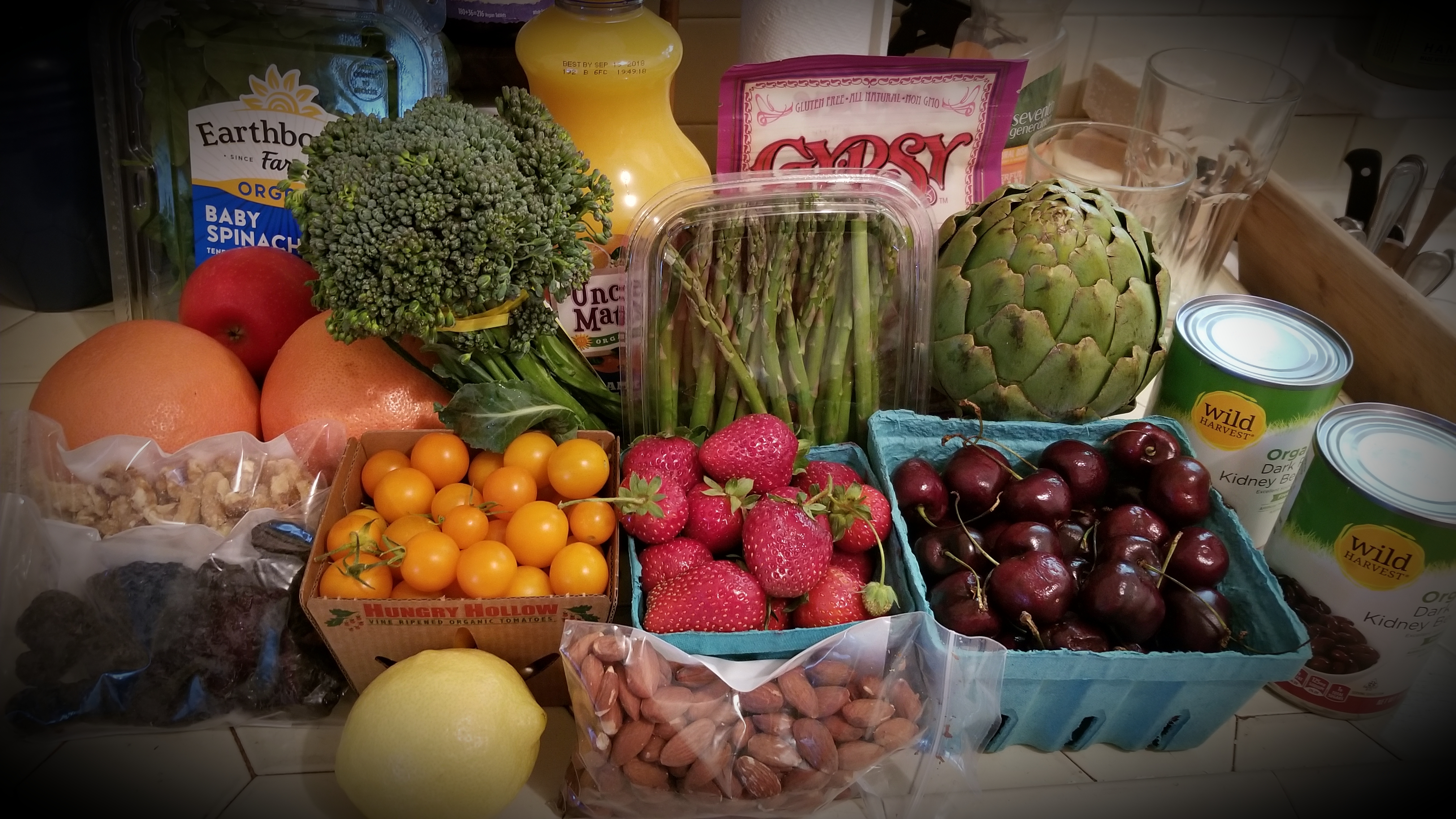
Photo by me:  foods rich in iron, folic acid and vitamins B-12 and C

It’s hard enough trying to balance all of the rules, changes, recommendations, and ups and downs of pregnancy, let alone to manage all of these things when you are over 35 years old.  There’s real pressure to make pristine choices to avoid and lower your risk – and because you’re older, your risk is greater – for everything from too much weight gain, too little weight gain, gestational diabetes, preeclampsia, anemia, low birth rate, and so on.

A huge part of my pregnancy journey has been my nutrition.  I have working knowledge of the best diet regimen for my personal bio-individual needs – especially since I have celiac disease and I need to boost my nutrient intake.  I have been taking a high quality, organic, food-based prenatal vitamin, along with a vitamin D3 supplement, prenatal DHA (Omega-3 support), and a 90-billion count probiotic.  All of these supplements address my personal needs.

Most importantly, I have been eating whole foods, organic whenever possible, and no processed food.  I have totally eliminated alcohol and significantly minimized my caffeine intake.  I’m following all of the rules.  I’m really trying!

At 17 weeks, I had my blood drawn for about 8 different vials – primarily for genetic testing and to learn our baby’s gender.  My inbox has been receiving messages daily with a new test result in, one by one.  All of the tests, thus far, have shown nothing but good health!  It’s been a relief.  However, yesterday, I received the results for my blood count with about 12 segments of my blood tested and analyzed.   My blood counts were all good, within normal ranges, except for my hemoglobin.  It was marked in the “Flag” section of the results with an ominous letter “L” for low.

My hemoglobin checked in at 11.5 g/dL, which is low for a non-pregnant healthy woman.  However, normal hemoglobin in pregnancy is typically anywhere between 10-14 g/dL.

So, what’s the deal with low hemoglobin and pregnancy?

Hemoglobin level of pregnancy can naturally lower to 10.5 gm/dL, which represents a normal anemia of pregnancy.  Normal anemia?

What is anemia?  It is a condition that develops when your blood lacks enough healthy red blood cells or hemoglobin. Hemoglobin is a main part of red blood cells and binds oxygen. If you have too few or abnormal red blood cells, or your hemoglobin is abnormal or low, the cells in your body will not get enough oxygen.

Anemia is very common!  Symptoms include fatigue, shortness of breath, dizziness or increased heartbeat.

Typcially treatment for anemia depends on the underlying diagnosis.  Iron supplements may be used for iron deficiency. Vitamin B supplements maybe used for low vitamin levels.  But, anemia in pregnancy is normal and can often be corrected via proper nutrition.

According to americanpregnancy.org, “a fall in hemoglobin levels during pregnancy is caused by a greater expansion of plasma volume compared with the increase in red cell volume.”  This is because pregnant women usually increase anywhere from 30 to 50 percent more blood volume than women who are not pregnant.

This is why pregnant women are often advised to increase their iron levels.  Ideally, this is accomplished by modifying the diet to eat more iron-rich foods.

I thought I was doing a good job of getting my daily recommended amounts of iron through my diet.  And, to be fair, I was probably doing a pretty good job.  This blood count test just affirmed for me the need to increase my food intake and by making healthy nutritious choices to meet those growing nutrient needs.

Your baby practically steals your nutrients from your body, so, your nutrient intake needs to exceed what is normal for you prior to pregnancy.

Many women will hear “low iron” and run for the burgers and steaks.  While lean meats are an excellent source for iron, it’s not enough.

While increasing your intake of iron-rich foods like whole eggs, spinach, artichokes, beans, lean meats, and seafood, you also need to add foods rich in cofactors – specifically folic acid, vitamin B12, and vitamin C – which are important for maintaining normal hemoglobin levels.   Keep in mind a cofactor is necessary substance that is essential for an enzymatic reaction to complete.  So, in order for your body to properly process iron, cofactors like folic acid, vitamin B12 and vitamin C are necessary for the enzymatic reaction to complete, breaking down the vitamins and minerals so that they can get absorbed into the blood stream to nourish you and your baby.

So, consuming all of the iron-rich foods in the world won’t matter if you don’t also eat cofactors to get the most out of the iron in your diet.  Make sense?

Here’s a list of iron-rich foods:
green leafy vegetables
spinach!
beetroot
tofu
asparagus
whole egg
apple
pomegranate
apricot
watermelon
prunes
pumpkin seeds
dates
almonds
raisins
artichokes
beans
lean meats
fish
poultry

Here’s a list of foods rich in cofactors folic acid, vitamin B12 and vitamin C:
fish
vegetables
nuts
cereals
peas
citrus fruits
strawberries
papaya
cherries
bell peppers
broccoli
tomatoes

For questions or concerns about low hemoglobin and anemia in pregnancy, contact your healthcare provider.  You can always start with managing your diet to include these nutrient-rich foods.  If your levels are still low, do not self diagnose iron or other supplements without your healthcare provider’s instruction.  This is because there are different doses and even possible contraindications associated with supplementation.  To protect yourself and your baby, it’s best advised to get professional advice based on your personal needs.