
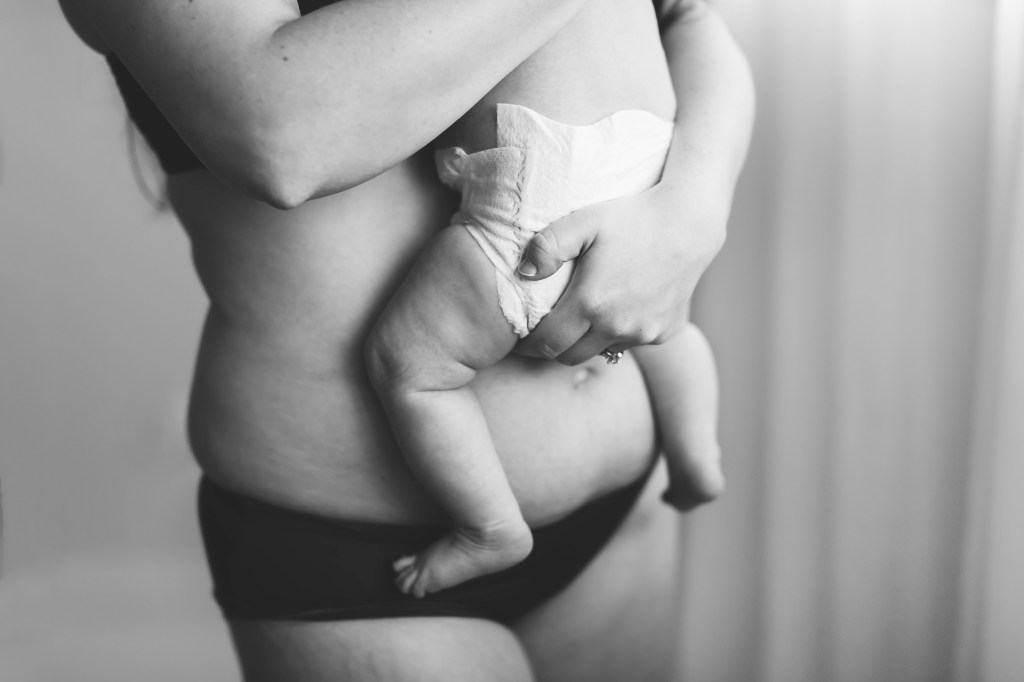
I have written quite a bit about my pregnancy and postpartum experiences.
I was very slow to get in any real movement following the whole child birthing experience. Even a couple of years after giving birth, I was still nowhere near having the body I had before my pregnancy. I didn’t get how some women would even try to “bounce back” with vigorous workouts and unfaltering determination to lose that “baby belly”. Weren’t they still healing, too?
I was an older mom giving birth for the first time. I didn’t care about how long the baby bump would linger. I just wanted to feel strong again, and recovered. Having a c-section certainly changed any post game workout plans I had. I walked a little. And that was pretty much it. For me, movement included chores around the house. But, I wasn’t up for yoga or the likes of Peloton. I gave myself a long break.
Nursing prevented me from gaining any extra weight. But, still, I felt… broken.
For me, childbirth left me with painful, sticky hips, no feeling in my pelvic region, and diastasis recti – abdominal separation leaving a gaping space where my abs should have reconnected. It has been nearly impossible to recovery my core.
Fast forward to the present – four years postpartum. I now have a personal trainer and for more than six months we’ve been working on recovering my core, pelvic floor, and toning up, in general. While I do feel stronger, I can’t really see any difference in the tone or shape of my body. My hips still hurt on the regular.
One day, a few weeks ago, I had bent over abruptly and felt discomfort in the space that would have been the top of my baby bump, under my breasts, at center – my core. Basically, I described the discomfort to my personal trainer from folding over on top of that space that held my former baby bump. It wasn’t painful, just a jarring discomfort that took my breath away. After a long pause, she said she believed it had to do with my diaphragm. And diastasis recti. But, really she was concerned with my diaphragm and how I was breathing.
I wasn’t sure what my diaphragm had to do with it. But, she said it would benefit me to continue working on bracing my core throughout the day. She said we would dig deeper the following week.
I took it upon my self to research the diaphragm and the postpartum body. What I learned brought me to tears. Not happy ones. But, tears of frustration. So much of my postpartum pain and suffering and discomfort could have been avoided had a healthcare practitioner told me that I needed to work on diaphragmatic breathing immediately following childbirth.
What I didn’t know cost me time and energy and extended pain and discomfort.
When I left the hospital after giving birth, I was forgotten. Lots of trips to the pediatrician to check in on my son. But, me? Nah, the hospital could care less. Other entities provided information online about the importance of diaphragmatic breathing – but, not the hospitals, not the healthcare providers. Do they not know this? Why would they withhold this key practice and rehab? You have to find your postpartum recovery and rehab wellness from yoga instructors and other professionals who seem to care more about the postpartum woman than doctors, nurses and hospitals.
So, what is diaphragmatic breathing and why is it so important to a postpartum woman?
When a woman is in her third trimester, after her organs have shifted around to make room for her growing baby, there is a great deal of pressure on the diaphragm and lungs, and the mother’s breathing eventually shifts from deep breaths lowering and expanding the diaphragm like a balloon to shallow breaths getting pushed upward, as if the shoulders are lifting the breath from the lungs. It happens without noticing it. The interesting thing is that many women continue to breathe like this long after the baby is born – like years after the baby is born.
This shallow, shorter breath starting from the chest, lifting the shoulders, gives you less oxygen and doesn’t work the core, so it keeps the weakened spots weak. This is a problem for many reasons, but, from a postpartum recovery standpoint, not breathing from the diaphragm will not help to recover a weakened core and pelvic floor, which then creates all kinds of compensations – including weak glutes, tight hips and sore back.
So, I struggled, even with a personal trainer, to see a significant change in my core, pelvic floor, glutes and hips. And, getting your breath to work properly again will restore the muscular balance to your body. This breathing will also prevent and heal postpartum issues like diastasis recti, incontinence and pelvic organ prolapse.
There is lots of great information about diaphragmatic breathing online. I found great therapeutic help here:
brb Yoga: core strength for life – How To “Fix” Your Body After Pregnancy
Browse the brb Yoga site for all kinds of postpartum healing resources.
I also learned more about diaphragmatic breathing here:
Mother.ly – “The answer to postpartum recovery may be how you breathe…”
The big take away for me is that it’s never too late to recover your breathing. I started doing diaphragmatic breathing exercises and techniques so that after a weekend of practice, my breathing was improved. I still have to work at it to get my natural breathing fully back, but, I am no longer doing the weird, short breaths that had started in my third trimester.
When I think about living through horrible colds and Covid-19 over the past couple of years – it’s no wonder I had suffered so badly! I wasn’t breathing right to begin with!
Had I not brought up the weird sensation in my belly to my personal trainer, I would have never arrived at this therapeutic postpartum rehab – that is the most essential technique that all women should do immediately after birth. Who knows if I would have ever returned to normal breathing. This is serious rehab that gets completely missed from hospitals and minimal OB-GYN postpartum care. How is it that postpartum women are not given this important instruction following birth?
As Brooke Cates, author of the Motherly article states, “correct breathing lays the foundation for healing and restrengthening your inner core. With breath, you begin the healing process postpartum by simultaneously rehabbing both the deep core and the pelvic floor.”
Cates explains once you’re breathing from your diaphragm again, you will have a calm, natural breathing sensation versus a stressed and more forced breathing action. I felt this shift 100%!
So, fast forward to exercise and movement to regain strength in your core, pelvic floor, and so on – “once your breath is re-wired you can progress with deep core-based activations, functional movements and smart core-based exercises.”
While I lamented that I could have felt so much more support, empowerment and strength just weeks postpartum, I allowed myself to mourn that absence of rehab for the past four years and move on. I finally have hope regarding these key issues of not feeling supported, empowered or strong. I had written in my journal for the past two years that I felt physically powerless and weak. And no more. One weekend of diaphragmatic breathing has already made a difference. I am excited to reap more benefits of this incredible rehab and finally reclaim my health and my body after four years of struggle.
It’s never too late to correct your breath. It’s never too late to heal your postpartum body. And I just want to share this with every woman I know who has had a baby or is about to have a baby. No one should suffer from the lack of support, empowerment and strength that is a given with the right postpartum rehab. If hospitals won’t share this with new mothers, then I suppose it’s up to mothers to pass this along.
 COSMIC BITS